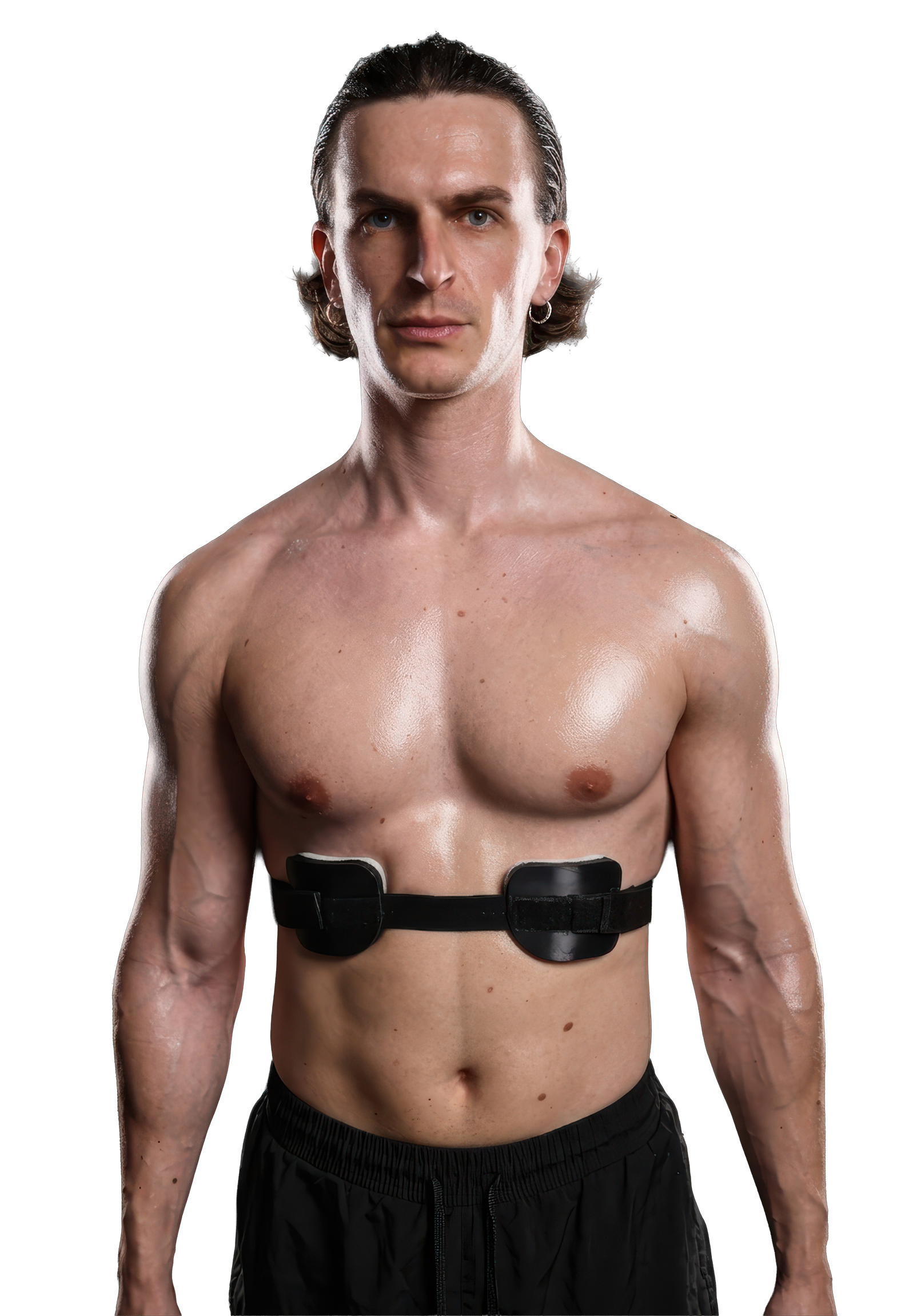
The vacuum bell was first described in the medical literature by Haecker et al. in 2006 — a relatively recent arrival as medical devices go. In the two decades since, it has accumulated a meaningful evidence base while remaining significantly underused in mainstream clinical practice.
Most people who find the vacuum bell find it through forums and patient communities, not from their surgeon’s office. That gap between what the research supports and what gets offered clinically is worth examining.
What the research actually says
Haecker’s original series
The foundational study by Haecker (2011) followed 120 patients over six years. At one-year follow-up, 70% had achieved clinically significant sternal elevation — defined as measurable lift that was maintained after device removal.
Younger patients (under 20) showed better outcomes. Children under 10 showed the best outcomes. This isn’t surprising — cartilage plasticity decreases with age, though it doesn’t disappear entirely in adults.
The Schier series
Schier et al. (2012) reported on 52 patients. Their results were more conservative — 55% achieved satisfactory elevation. Crucially, they noted that outcomes were strongly correlated with compliance: patients who used the device consistently according to protocol showed significantly better results than irregular users.
This is the most important finding in the literature, and the one most frequently glossed over in online discussions.
Long-term studies
The concern with any non-surgical correction is retention — does the improvement last? Klobe et al. (2013) followed 24 patients for a minimum of 2 years post-treatment. 67% maintained clinically significant elevation at follow-up. The patients with complete correction at end-of-treatment retained results most reliably.
Adult outcomes
The common belief that vacuum bell therapy “doesn’t work for adults” is an oversimplification. Cohee et al. (2014) specifically studied adult patients. Meaningful sternal elevation was achieved in the majority of compliant adult patients, though timelines were longer and complete correction rates were lower than in adolescent cohorts.
The honest characterisation: it works less reliably in adults, takes longer, and requires more rigorous protocol adherence — but it does work in a meaningful subset.
What the research doesn’t cover
The published literature on vacuum bell therapy has significant gaps that practitioner communities have filled empirically:
Session structure. Most studies report daily use in sessions of 30-60 minutes without specifying the structure within sessions. The clinical experience strongly suggests that multiple shorter sessions (15-20 minutes, 3-4 times daily) outperform single long sessions for adaptation purposes.
Supporting interventions. No published randomised controlled trial has examined vacuum bell therapy combined with structured breathing mechanics work, thoracic expansion exercise, and postural correction versus device use alone. The combination approach is supported by mechanism but not by direct RCT evidence.
Suction calibration. Studies rarely specify the target vacuum level or how it should progress over time. The clinical consensus — based on patient outcomes — is a graduated increase in suction from a comfortable starting point, progressing as tolerance develops.
Who responds best
Based on the published literature and clinical experience, the predictors of better vacuum bell outcomes:
- Younger age — particularly under 25, with adolescents showing the most reliable results
- Lower Haller Index — moderate cases respond better than severe
- Symmetric depression — asymmetric and very deep depressions are harder to correct with suction alone
- No significant cartilage calcification — common in adults over 30, reduces the plasticity required for correction
- High protocol compliance — this is the strongest predictor and the one most within your control
What a correct protocol looks like
The device is not the protocol. The device creates the mechanical stimulus; the protocol determines whether the stimulus produces structural correction.
A complete vacuum bell protocol includes:
-
Session structure — daily sessions divided across the day, not one long session. The initial two-week build-up period to allow skin and tissue adaptation.
-
Suction calibration — starting at a comfortable level and progressing systematically, not immediately at maximum suction.
-
Skin response monitoring — reading the contact marks and redness that indicate compression distribution, adjusting positioning accordingly.
-
Paired exercise — thoracic expansion work during and between sessions, diaphragmatic breathing mechanics, postural correction. These create the structural environment in which the sternum can move.
-
Measurement protocol — baseline photography and, if possible, sternal depth measurement. Milestone checkpoints at 4, 8, and 16 weeks to confirm correction trajectory.
-
Progress decision points — knowing when to continue, when to adjust, and when the vacuum bell alone is insufficient and complementary approaches are needed.
The honest conclusion
Vacuum bell therapy is a legitimate, evidence-supported non-surgical treatment for pectus excavatum. It works reliably in appropriate candidates who follow a complete protocol. It does not work as a passive device you strap on daily — the protocol surrounding the device determines the outcome.
The researchers who have studied it consistently identify compliance as the primary outcome predictor. Compliance is not just about wearing the device every day — it’s about following a structured, progressive protocol that gives the cartilage the mechanical stimulus it needs to remodel.
The literature supports it. The mechanism is established. The results in compliant patients are real.
I had pectus excavatum. I corrected it non-surgically. For the past decade I've worked with over 1,000 people navigating pectus correction. These articles are built from that experience - not adapted from somewhere else.
Full story →This article is for educational purposes only and does not constitute medical advice. Always consult a qualified healthcare professional before starting any treatment protocol. View full disclaimer →