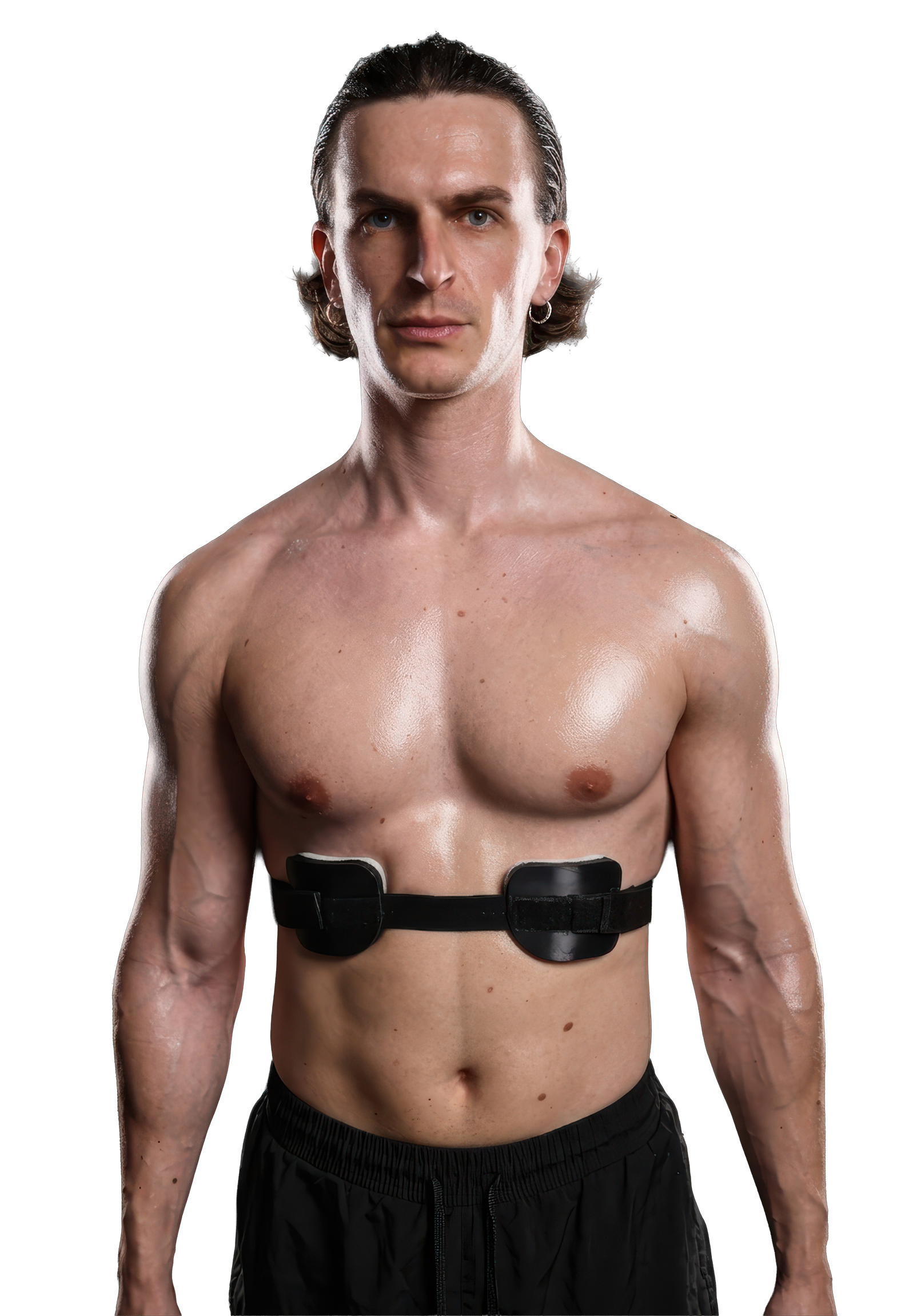
The most consequential decision in pectus excavatum management is whether to pursue surgical or non-surgical correction. It’s a decision made with incomplete information, significant emotional weight, and — frequently — advice from surgeons who operate and practitioners who advocate for conservative care.
This article attempts an honest comparison of both paths.
The Nuss procedure: what it is and what it does
The Nuss procedure, developed by Dr. Donald Nuss in the late 1980s, is now the standard surgical approach for pectus excavatum. The technique:
- Two small incisions are made on either side of the chest
- A curved metal bar is passed behind the sternum using a thoracoscope
- The bar is flipped to push the sternum outward to a corrected position
- The bar is secured and left in place for 2-3 years
- A second surgical procedure removes the bar
The technique has been refined significantly since its introduction. Surgical outcomes are generally good.
What the surgical literature shows
Success rates are high — studies report correction rates of 85-95% for achieving acceptable sternal elevation. Recurrence rates after bar removal are around 5-10%, with higher rates in patients with significant cartilage calcification or incomplete correction before removal.
Complications occur in 5-15% of cases. Common complications include pneumothorax (air in the chest cavity), pleural effusion (fluid), bar displacement, pericarditis, and wound infection. Serious complications are less common but include haemothorax and, rarely, cardiac injury.
Pain management is significant and has been the primary focus of ongoing procedure refinement. Early Nuss series relied on epidural anaesthesia; current approaches vary by centre, with some using cryoablation of intercostal nerves (freezing the pain nerves during surgery) to reduce post-operative pain. Pain in the first weeks remains a common challenge.
Hospital stay is typically 3-5 days. Return to non-strenuous activity in 2-3 weeks. Full activity restriction for 6-8 weeks. Contact sports prohibited for 3 months.
Cost ranges from $20,000-$60,000+ in the United States. Coverage varies significantly by insurer and jurisdiction.
Timing. The optimal age window for the Nuss procedure is typically 12-18 years, during peak cartilage plasticity. The procedure is performed in adults but with higher complication rates and longer recovery.
Non-surgical correction: what it can and cannot do
Non-surgical correction — primarily vacuum bell therapy combined with structured exercise and breathing mechanics work — is not appropriate for all cases. Being clear about this is important.
What non-surgical correction can do:
- Produce clinically significant sternal elevation in approximately 50-70% of compliant patients when started in adolescence or young adulthood
- Achieve complete correction in a meaningful subset of mild-to-moderate cases
- Produce partial correction that improves appearance, function, and quality of life even when complete correction is not achieved
- Serve as a preparatory intervention that reduces the required surgical correction in cases that ultimately need surgery (reducing Haller Index before surgery simplifies the procedure)
What it cannot reliably do:
- Correct severe cases (Haller Index > 6.0) in the same predictable timeline as surgery
- Produce the same structural certainty of outcome as surgical correction
- Achieve meaningful results in cases with significant cartilage calcification (most adults over 35)
- Produce rapid correction — timelines are typically 12-36 months versus the immediate correction of surgery
The comparison across key dimensions
Certainty of outcome
Surgery: high. If technically successful, the result is predictable and immediate.
Non-surgical: moderate. Outcomes are real but variable. Compliance, age, severity, and protocol quality all affect results.
Recovery and disruption
Surgery: significant. 6-8 weeks of activity restriction with the bar in place for 2-3 years. A second procedure for bar removal. The disruption is concentrated in a defined period.
Non-surgical: distributed. Daily sessions over 12-36 months. Less intense disruption, but more sustained commitment.
Risk profile
Surgery: defined procedural risks (anaesthesia, complications, bar displacement) concentrated in a defined window.
Non-surgical: very low risk. Skin irritation from device contact is the primary concern. No anaesthesia, no surgical risk.
Cost
Surgery: $20,000-$60,000+ in the US, significantly less in countries with national health systems or different surgical pricing structures.
Non-surgical: $1,500-$3,000 for device and protocol. A fraction of surgical cost.
Effectiveness ceiling
Surgery: high and predictable for appropriate candidates.
Non-surgical: genuinely effective for mild-to-moderate cases in the right age window; less reliable for severe cases and adults.
How to think about the decision
The decision framework that makes sense given the evidence:
Pursue non-surgical first if:
- You’re under 25 with mild-to-moderate severity (Haller Index under 4.5)
- You have a genuine timeline — you can commit 12-24 months to a proper protocol
- You’re willing to measure outcomes rigorously and make a data-based decision about switching to surgical if results are insufficient
- You have access to a structured protocol, not just a device
Consider surgery if:
- Severity is significant (Haller Index > 4.5-5.0) with functional symptoms
- Age and cartilage calcification make non-surgical results unlikely
- Non-surgical correction has been genuinely attempted with a complete protocol for 12+ months without adequate response
- Functional impairment (cardiac displacement, exercise limitation) is the primary driver rather than cosmetic concern alone
Surgery is not necessarily better just because it’s certain. The certainty of surgical outcome comes with real costs — procedural risk, recovery, the bar removal procedure, and significant financial cost. For cases where non-surgical correction has a reasonable probability of success, a genuine trial is warranted before committing to surgery.
Non-surgical is not automatically preferable because it avoids surgery. For severe cases in the right surgical candidates, the Nuss procedure produces excellent, lasting results that non-surgical correction cannot reliably replicate. Avoiding surgery because of fear rather than clinical logic serves nobody.
The honest answer is case-specific. The same honest answer: get the information about your specific case — severity, age, cartilage characteristics — and make the decision on that basis rather than on principle.
I had pectus excavatum. I corrected it non-surgically. For the past decade I've worked with over 1,000 people navigating pectus correction. These articles are built from that experience - not adapted from somewhere else.
Full story →This article is for educational purposes only and does not constitute medical advice. Always consult a qualified healthcare professional before starting any treatment protocol. View full disclaimer →