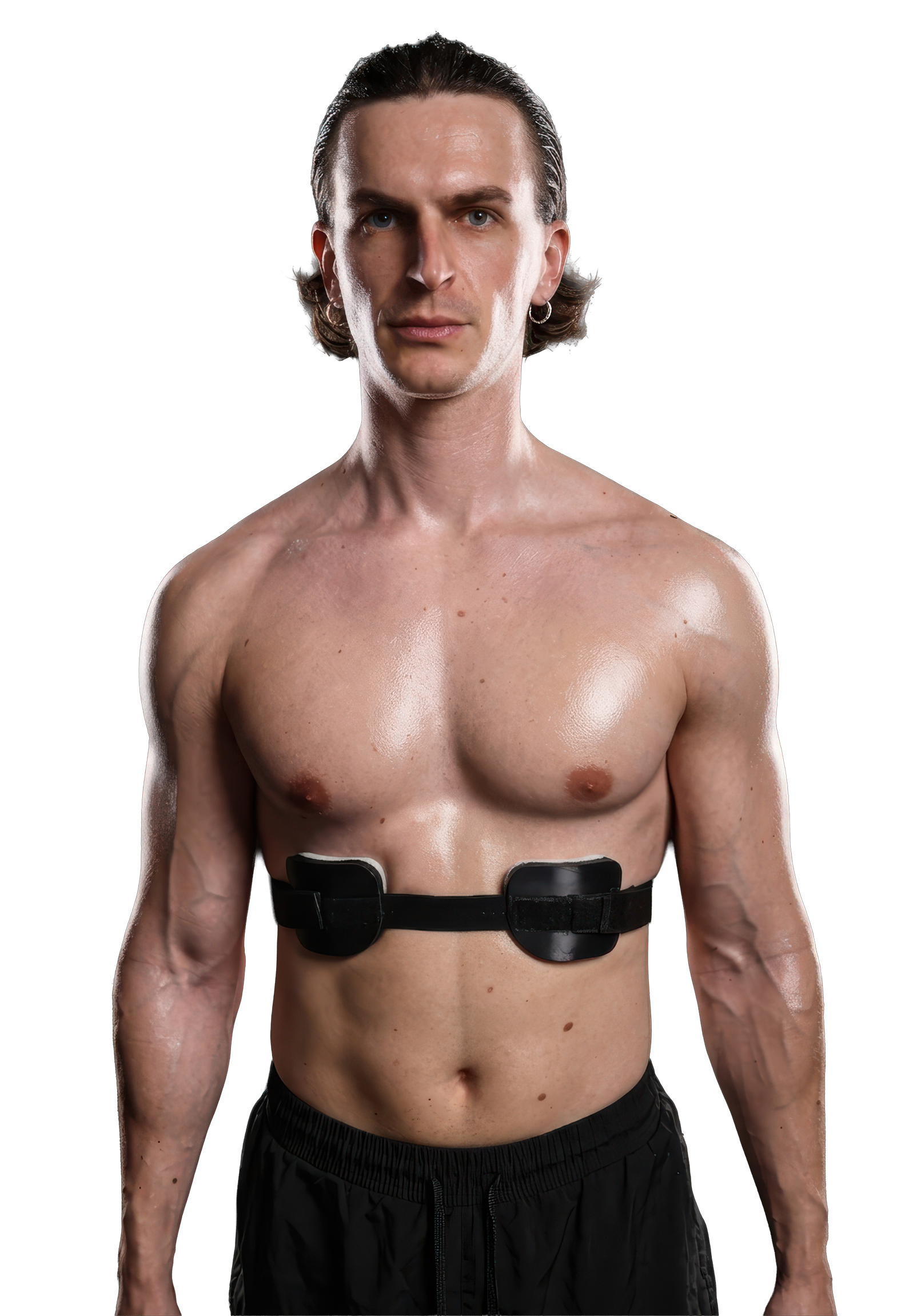
Pectus carinatum brace therapy has one of the strongest evidence bases of any non-surgical chest wall correction approach. Multiple prospective studies, decent follow-up periods, and consistent findings: compliant brace therapy produces measurable protrusion reduction in adolescent and young adult cohorts.
The success rate in the published literature ranges from 70% to over 90% in adolescent cases. That’s a remarkably good result for a non-invasive intervention.
And yet people wear braces for months and see nothing change.
The gap between what the research demonstrates and what individual patients experience comes almost entirely down to one variable: the protocol.
What the research shows
The landmark studies on carinatum brace therapy — Brar et al. (2014), Kim et al. (2016), Cohee et al. (2014) — share consistent findings:
Compliance is the primary outcome predictor. Patients who wear the brace consistently in the therapeutic pressure range produce structural correction. Patients who wear it inconsistently do not. This finding is so consistent across studies that compliance measurement is now considered essential in carinatum brace research.
Pressure calibration matters. Too little pressure produces no mechanical stimulus for cartilage remodelling. Too much causes skin breakdown and pain that reduces compliance. The therapeutic window — enough pressure to produce a measurable indentation in the protrusion without causing injury — is where results happen.
Exercise integration improves outcomes. Studies comparing brace therapy alone versus brace therapy with supervised exercise consistently show better outcomes in the exercise group. The mechanism: breathing mechanics and thoracic mobility work during brace therapy allows the chest wall to respond more effectively to compression.
Age determines timeline. The earlier brace therapy starts, the faster the correction. Adolescents in their early growth phase correct faster than late adolescents, who correct faster than adults. Correction is possible across the age range, but the expected timeline differs significantly.
The protocol elements most people are missing
Pressure calibration
“Wear it as tight as possible” is the standard instruction. It’s wrong.
The therapeutic pressure is enough to create a visible contact mark without causing skin breakdown, bruising, or significant pain after removal. Starting at this level and gradually increasing as skin conditioning occurs is the correct approach.
Many patients start too tight (causing pain and skin problems that reduce compliance) or too loose (producing no mechanical stimulus and no correction). The calibration protocol — how to find and maintain therapeutic pressure, how to progress it over time — is what most fitting appointments don’t cover.
Wear schedule
The literature typically reports outcomes in terms of total daily wear hours. The range associated with successful correction is 8-16 hours per day, depending on correction phase.
What the literature doesn’t specify is the structure of those hours. Clinical experience strongly suggests that:
- Consistent daily wear at therapeutic pressure outperforms maximum hours at incorrect settings
- Build-up periods in the first two weeks prevent the skin breakdown that derails compliance
- Strategic scheduling — wearing the brace during stationary activities while removing it for intense physical activity — produces sustainable compliance patterns
Exercise pairing
The exercises that compound brace therapy are not general fitness exercises. They are:
- Breathing mechanics work that maintains thoracic mobility under compression
- Thoracic extension and upper back mobility to address the postural pattern carinatum creates
- Core and breathing integration that prevents the trunk compensation patterns that develop under brace compression
Generic exercise advice given by orthotists (“do chest exercises”) frequently produces counter-productive results — building muscle in patterns that fight the compression rather than working with it.
Measurement and documentation
Without a measurement protocol, you cannot know whether the brace is working. The caliper measurement of protrusion height from a standardised reference point — taken weekly at a consistent time and brace-off state — is the data that tells you whether your pressure is calibrated correctly.
Most patients never establish a baseline measurement. They rely on visual assessment, which is subjective, susceptible to lighting and angle variation, and unable to detect the small but meaningful early changes that confirm the protocol is working.
The honest picture
Carinatum brace therapy works. The research is clear on this.
The success rate in compliant patients is genuinely high. Higher than most non-surgical interventions for any structural condition. But compliance is not simply putting the brace on daily — it’s following a structured protocol that addresses pressure calibration, wear scheduling, skin management, exercise integration, and measurement.
The brace your orthotist fitted is the tool. The protocol is what produces the correction.
The patients who wear a brace for months and see nothing change are almost universally in the wrong pressure range, the wrong wear schedule, or both — without a measurement system to tell them so.
The fix is not a new brace. It’s a complete protocol.
I had pectus excavatum. I corrected it non-surgically. For the past decade I've worked with over 1,000 people navigating pectus correction. These articles are built from that experience - not adapted from somewhere else.
Full story →This article is for educational purposes only and does not constitute medical advice. Always consult a qualified healthcare professional before starting any treatment protocol. View full disclaimer →