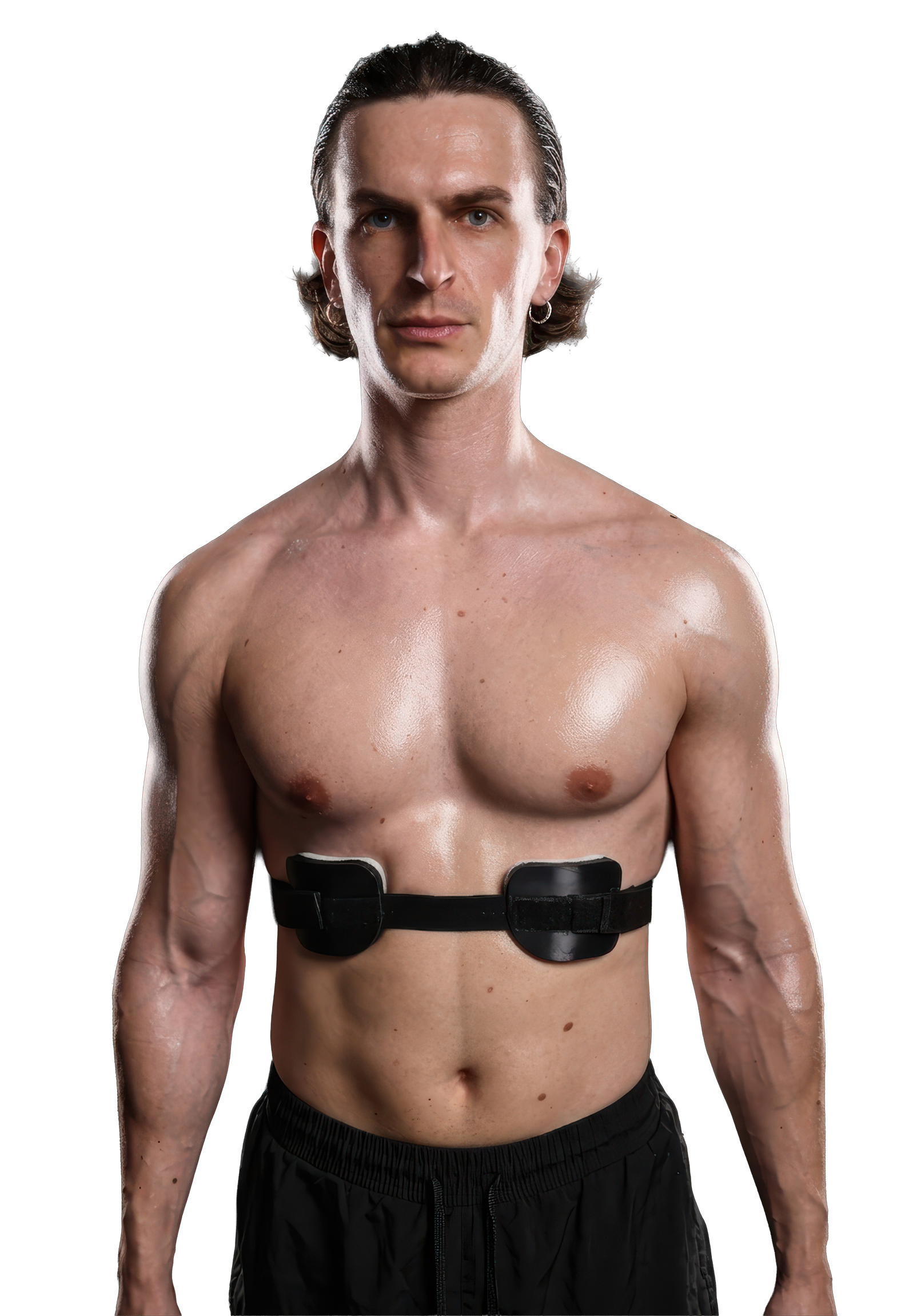
Pectus excavatum — Latin for “hollowed chest” — is the most common chest wall deformity, affecting roughly 1 in 300 to 1 in 400 people. The sternum and adjacent costal cartilages grow inward rather than outward, creating a visible and sometimes functionally significant depression in the chest.
It sounds simple. The lived reality is more complicated.
What actually causes it
The underlying mechanism is overgrowth of the costal cartilage — the flexible connective tissue that joins the ribs to the sternum. When this cartilage grows faster than the surrounding bony structures, it pushes the sternum inward.
Why this happens in some people and not others is still not fully understood. What the research has established:
- Genetic component is strong. Approximately 40% of people with pectus excavatum have a first-degree relative with the same condition.
- Connective tissue associations. Pectus excavatum occurs at significantly higher rates in people with Marfan syndrome, Ehlers-Danlos syndrome, and scoliosis. A cardiology workup is standard in moderate-to-severe cases.
- It often worsens through adolescence. The depression is frequently present from birth but typically becomes more pronounced during the growth spurts of puberty, which is why early adolescence is the most active window for non-surgical intervention.
How severity is measured: the Haller Index
The Haller Index is the standard clinical measure of pectus severity. It’s calculated from a CT scan:
Haller Index = transverse chest diameter ÷ AP chest diameter
Where AP (anteroposterior) diameter is the distance between the sternum and the spine at the deepest point of the depression.
| Score | Classification |
|---|---|
| < 3.2 | Mild |
| 3.2 – 3.6 | Moderate |
| > 3.6 | Severe |
| > 6.0 | Extreme |
A Haller Index above 3.25 is the typical surgical threshold — but this is a guideline, not a rule. Functional symptoms, rate of progression, and impact on quality of life are all part of the clinical picture.
What it actually does to the body
The functional impact of pectus excavatum depends heavily on severity. Mild cases often cause no physiological limitation — the primary impact is cosmetic and psychological. Moderate to severe cases can produce measurable effects:
Cardiac displacement and compression. The inward-pressing sternum compresses the right ventricle, which sits immediately behind it. This reduces stroke volume — the amount of blood pumped per heartbeat — particularly during exertion. Studies consistently show reduced exercise capacity in moderate-to-severe PE compared to controls.
Pulmonary restriction. The reduced thoracic volume limits full lung expansion. Forced vital capacity (FVC) and total lung capacity (TLC) are frequently below predicted values in severe cases.
Postural compensation. The body adapts to the altered thoracic mechanics through forward head posture, rounded shoulders, and thoracic kyphosis. These postural adaptations compound the aesthetic concern and contribute to chronic musculoskeletal discomfort.
Psychological impact. This is consistently underreported in clinical literature. The shame, self-consciousness, and avoidance behaviours associated with pectus excavatum are well-documented anecdotally and increasingly recognised in research. Social withdrawal, avoidance of activities involving undressing, and reduced quality of life are common — and real outcomes that treatment addresses.
The treatment spectrum
Non-surgical: vacuum bell therapy
The vacuum bell is a suction-based device placed over the depression. Negative pressure is applied through a hand pump, which lifts the sternum off the chest. With consistent daily use over months and years, the cartilage adapts to the new position.
Success rates in the published literature vary between 50% and 70% for clinically significant elevation — defined as measurable, sustained sternal lift. The key variables are:
- Starting severity (less severe = better outcomes)
- Age (younger = more cartilage plasticity)
- Protocol adherence (this is the most important factor)
- Supporting interventions (breathing mechanics, exercise, posture work)
The vacuum bell is not passive. It requires a structured session protocol, complementary exercise programming, and a measurement system to confirm progress. Devices without a protocol produce inconsistent results.
Non-surgical: corrective exercise and breathing
Even without a vacuum bell, targeted exercise programming can produce meaningful improvement in mild-to-moderate cases — and significantly compounds the effect of vacuum bell therapy. The mechanism is:
- Thoracic expansion work — stretching and mobilising the chest wall to increase the available volume for sternal correction.
- Breathing mechanics — diaphragmatic breathing and costal expansion increase thoracic volume and reduce the chest-dominant breathing pattern that reinforces the depressed position.
- Postural correction — addressing the forward shoulder and thoracic kyphosis pattern that PE creates, which both improves appearance and reduces the compensatory mechanics that compound the depression.
Surgical: the Nuss procedure
The Nuss procedure is the current standard for surgical correction. A curved metal bar is inserted behind the sternum through small lateral incisions and flipped to push the sternum outward. The bar remains in place for 2-3 years before removal.
Results are generally excellent in appropriate candidates. The tradeoffs:
- General anaesthesia and 3-5 days hospitalisation
- 6-8 weeks restricted activity during recovery
- Pain management for the first several weeks
- A second surgical procedure for bar removal
- Costs starting at $40,000 in the US
Surgery is the right answer for some cases — particularly severe presentations in adolescents with significant functional impairment, or cases where non-surgical correction has not produced adequate results after a genuine trial.
It is not always the only answer.
What you should do next
If you’ve just been diagnosed — or you’ve known for years and are only now looking for a path forward — the first step is the same: get a clear picture of where you actually are.
Photograph your chest from the front and side. Measure your sternal depth if possible. Understand your Haller Index if you have a CT scan. This baseline is what everything else is measured against.
Then understand your options honestly. Non-surgical correction works for a significant portion of the people who pursue it with the right protocol. Surgery works for most people who need it. The worst outcome is months or years of half-hearted approach that produces neither result.
A complete protocol — not just a device or a few exercises — is what produces consistent, measurable correction.
I had pectus excavatum. I corrected it non-surgically. For the past decade I've worked with over 1,000 people navigating pectus correction. These articles are built from that experience - not adapted from somewhere else.
Full story →This article is for educational purposes only and does not constitute medical advice. Always consult a qualified healthcare professional before starting any treatment protocol. View full disclaimer →