How to Use This Program
If you have pectus carinatum surgery booked, or you're about to book it, this is your preparation plan: exactly what to do in the weeks before to walk into the operation as strong, fit and ready as possible.
Carinatum is usually repaired one of two ways: a minimally invasive sternal-compression technique (the Abramson procedure), which fixes a bar in front of the chest to press the protrusion back, or an open Ravitch-type repair that removes overgrown cartilage and resets the sternum.1,2,4 Either way it's a real operation under general anesthesia, and the fitness, posture and breathing skill you bring into it shape how the first weeks afterward go.28,29
This is the discipline of prehabilitation: getting measurably fitter and better-prepared before surgery so you recover faster and with fewer complications. Prehab and structured pre-operative preparation are built into modern enhanced-recovery (ERAS) pathways and are associated with shorter stays and smoother recoveries.29,30,33,34
Why the Weeks Before Surgery Decide Your Recovery
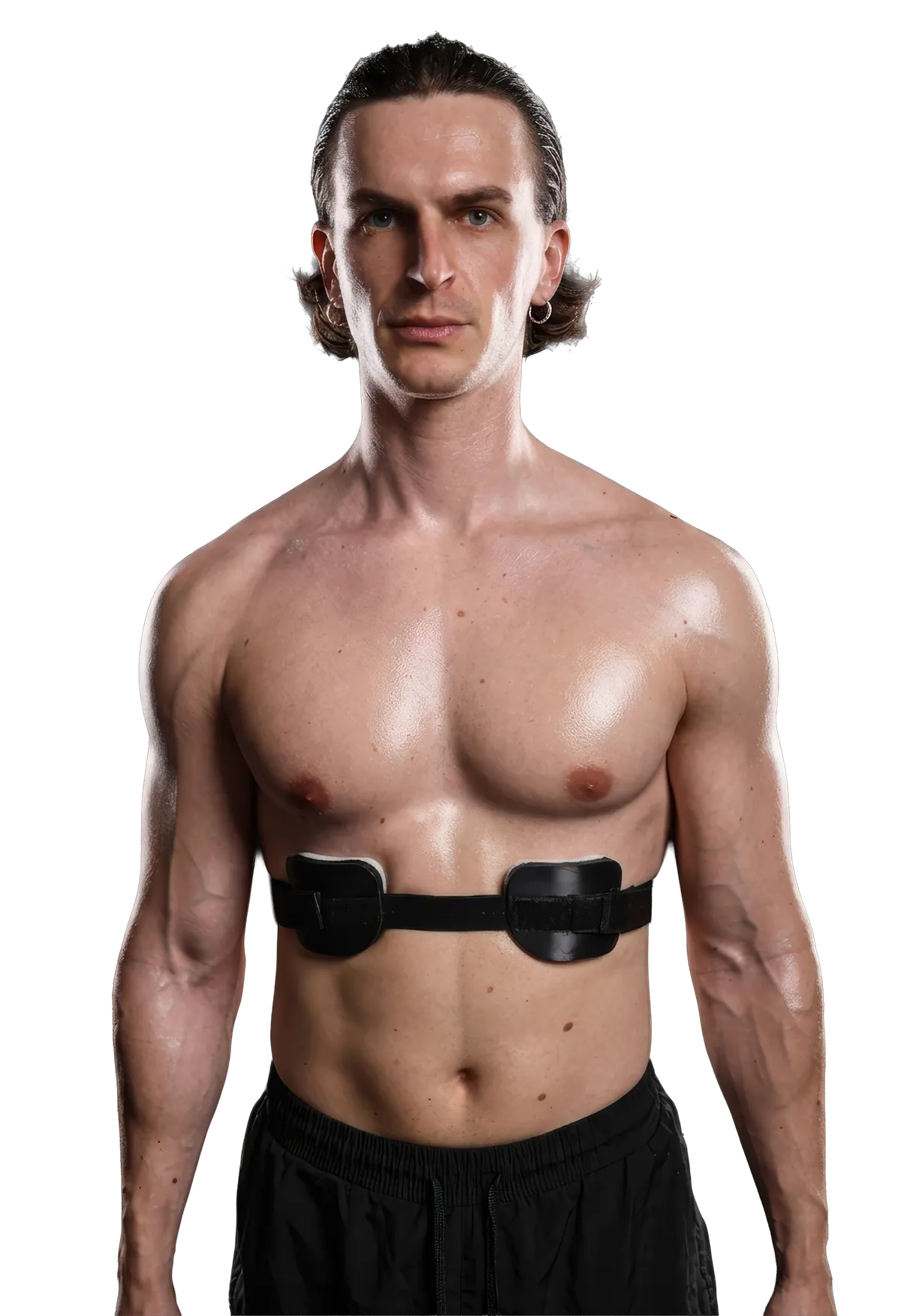
Carinatum responds so well to bracing that most surgeons want a proper compression-brace protocol tried first, and many cases flatten without an operation at all.11,12,13,15 If surgery is genuinely the route for you, the same logic that makes bracing work, consistent ribs-down posture and a strong upper back, is exactly what you want to build before the operation and hold after it.
The fitter, stronger and better-nourished version of you recovers faster. Pre-op breathing practice reduces pulmonary complications after chest surgery,31,32,33 prehab improves postoperative functional capacity,34 and stopping smoking plus topping up nutrition moves every dial that's actually in your control.35,38,39 The operation flattens the structure; preparation decides how the recovery feels, and how well the result holds.
Your Operation & What It Does
In the minimally invasive (Abramson) repair, a bar is fixed across the front of the chest and connected to the sternum to apply steady inward compression, gradually flattening the protrusion.2,22 In the open (Ravitch) repair, the overgrown rib cartilage is removed and the sternum repositioned.4,48,49 Surgery is usually reserved for pronounced, rigid or skeletally mature cases where bracing has been tried or isn't suitable.8,11,27
It helps to know what your body will be doing in the weeks after:
- Cartilage & bone remodel slowly under the new corrective load, which is why posture and gradual strengthening matter for months afterward.
- The chest wall is sore and stiff early; deep breathing keeps the lungs open while you guard.31,32
- With the Abramson bar, hardware needs scar tissue to anchor, so the first phase protects it, no twisting or heavy lifting until cleared.22
What Recovery Will Demand of You
Prehab makes sense once you know what you're preparing for. In the first weeks after surgery you will be asked to:
| You'll be asked to… | So prepare now by… |
|---|---|
| Breathe deeply and often to keep the lungs open31,32 | Learning diaphragmatic breathing now so it's automatic |
| Walk from day one and build distance29 | Banking a cardio base you can fall back on |
| Hold a tall, ribs-down posture with a sore chest | Drilling posture and back strength in advance |
| Move as one unit, no twisting or lifting early | Rehearsing the log-roll and setting up your home |
| Heal cartilage, bone and incisions38,39 | Arriving well-nourished, not smoking, iron-replete |
Everything in this program maps to one of those demands. You're not training to be an athlete, you're loading the dice for an easier recovery and a result that holds.
Your Prehab Timeline
Ideally you have six to eight weeks. If you have less, do everything you can in the time you have, even two weeks of breathing practice and smoking cessation moves the needle.33,36
| When | Focus | Key actions |
|---|---|---|
| 8–4 weeks out | Build the engine | Start daily breathing drills, the strength program, cardio; stop smoking; book any dental/medical clearances33,35 |
| 4–2 weeks out | Sharpen & nourish | Keep training; dial in protein, vitamin D, iron; confirm which meds to pause with your surgeon38,40 |
| Final 2 weeks | Taper & organise | Ease off heavy lifting, keep walking and breathing; set up the house; pre-op checklist34 |
| Day before | Rest & follow rules | Follow fasting and skin-prep instructions exactly; pack your bag; sleep42 |
Breathing & Lung Prep
Any chest-wall operation under general anesthesia carries a risk of the small air sacs collapsing, atelectasis, as breathing goes shallow under pain and sedation.31 Deep-breathing protocols and incentive spirometry are front-line prevention, and preoperative inspiratory-muscle training lowers postoperative pulmonary complications in major surgery.31,32,33 The goal of prehab breathing is to be so fluent you can do it half-asleep and in pain.
- Diaphragmatic breathing. Hand on belly, slow nasal inhale into the lower ribs, long exhale. 5–10 minutes, a few times a day.28,31
- Incentive spirometry / inspiratory-muscle training. If you can get a spirometer now, practise 10 slow maximal breaths a few times daily; otherwise slow maximal inhales with a 3-second hold build the same habit.32,33
Posture & Ribs-Down Base
Surgery flattens the protrusion; posture is what keeps it looking that way. A common pattern with carinatum is a lifted ribcage and rounded shoulders, and the most reliable way to lose the visual result is spending recovery hunched and guarded.21,28 You can't strengthen through a fresh repair, so build the base now: upper-back and scapular strength plus a ribs-down posture you'll pause briefly and then rebuild.
- Pull-dominant strength: rows, lat work and face-pulls build the muscles that hold a tall, flat chest.
- Ribs-down posture: ribs stacked over pelvis, lower front ribs softly down, shoulder blades back and down, held through the day.
- Anti-extension core: dead-bugs and planks teach the trunk to stay quiet rather than flaring the chest open.
Physiotherapy as an adjunct to chest-wall surgery improves posture and function,28 and the stronger your starting point, the faster you return to it. See the full routine in the Strength Program.
Cardio & Conditioning
A better cardiovascular base going in means you tolerate anesthesia better, mobilise sooner and reach your walking targets faster.29,34 Aim for steady aerobic work in the weeks before surgery:
- Most days: 20–40 minutes of brisk walking, cycling or swimming at a conversational-to-slightly-breathless pace.
- Build, don't blast: the goal is a durable base, not personal records, stop heavy or high-impact work in the final two weeks.
- Practise nasal, ribs-down breathing during cardio so the two skills reinforce each other.
Nutrition, Bone & Body Prep
Eat to heal, starting now
You'll be healing cartilage, bone and incisions, which is protein- and micronutrient-hungry. Build the stores before surgery, not after. Prioritise adequate protein at every meal, and keep vitamin D topped up (≥800 IU/day, aiming >30 ng/mL) with enough calcium, vitamin D supports bone healing, muscle strength and infection control, and deficiency is linked to worse surgical outcomes.38 Zinc and vitamin C support wound repair.39
Fix anemia before, not after
Going into surgery iron-replete matters: preoperative anemia is linked to more transfusions and complications, and correcting iron stores beforehand is a core part of patient blood management.40 If you bruise easily, have heavy periods or eat little red meat, ask your team to check your iron and hemoglobin early enough to fix them.
Arrive at a healthy weight
Use the prehab window to steady your nutrition rather than crash-diet, the aim is to arrive well-fuelled and strong, which is also when posture training sticks best.34
Stop Smoking & Alcohol
If you smoke or vape, quitting before surgery is one of the highest-impact things you can do. Preoperative smoking cessation reduces postoperative complications (wound, pulmonary and otherwise) and the longer the smoke-free interval before surgery, the bigger the benefit; even a few weeks helps.35,36
Cut alcohol too. Heavy drinking impairs healing and raises complication rates, and a period of abstinence before surgery improves outcomes.37 Treat both as part of the program, not an afterthought.
Medical Optimization
Some of the most important prep is administrative. In the weeks before surgery:
- Review every medication and supplement with your surgeon. Some blood thinners, anti-inflammatories and herbal supplements must be paused before surgery, but only on your team's instruction, never on your own.42
- Clear active infections. Sort out dental problems, skin infections and chest infections in advance, they can delay surgery or raise risk.
- Attend your pre-operative assessment and be honest about your history; carinatum can be associated with other findings, so your team needs the full picture.26,27
- Confirm your hardware if you're having the Abramson repair, what's used and what it means for future imaging and activity.22
Mind & Expectations
Preparation is mental as much as physical. The encouraging part is well-documented: surgical repair of chest-wall deformity markedly improves body image, self-esteem and confidence in physical activity, with the biggest shift in the first weeks of recovery.43,44,47 People with pectus often carry lower quality of life and body image beforehand, and that is exactly what tends to lift after correction.46,47
Set expectations now: the first sore days are the hardest, then it climbs steadily. Knowing the timeline, rehearsing the breathing, and having your home set up takes most of the anxiety out of it.34 If you feel persistently low or panicky before surgery, tell your team, that's part of being prepared too.
Meditation & Anxiety
Surgery is stressful, and a protruding chest carries a real psychological weight long before the operating room. People with pectus report measurably higher anxiety and poorer body image than their peers.51,52
A daily meditation practice is one of the best-evidenced, lowest-cost tools for that anxiety. Mindfulness meditation has good-quality evidence for reducing anxiety, across randomized trials and large meta-analyses in both clinical and everyday populations.53,54,55,56,57 It won't change the shape of your chest and it won't replace your surgical team, it changes your relationship to the worry about it, which is exactly what you want steady going into surgery.
How to start, 10 minutes a day
- Guided first. Don't sit in silence wondering if you're doing it right, follow a guided session. Waking Up is what I use; choose the scholarship / $0 option to try it free.
- Same time daily. 10 minutes, ideally in the morning before you reach for your phone. Consistency beats length.
- Notice, don't fight. When a thought about your chest or the surgery shows up, label it and return to the breath. That's the whole rep.
Set Up Home for Recovery
Do this while you're still mobile and strong, your future self, two days post-op, will thank you.
- A place to sleep semi-upright: a recliner or a stack of firm pillows, so you can breathe easily and avoid twisting onto the repair early on.
- Loose, front-button clothing you don't have to pull over your head, plus a grabber for low items.
- A meds and bowel plan ready to go: pain-medication constipation is predictable, so have a stimulant-laxative plan organised before you start.
- Stock the kitchen with easy, protein-rich food, and line up help with lifting, driving and chores for the first 1–2 weeks.
The Prehab Strength Program
The goal is a ribs-down posture, posterior-chain and core base you'll pause for a few weeks after surgery and then rebuild, plus the breathing and cardio habits that carry straight into recovery. Train pull-dominant, keep everything pain-free, and taper the heavy work in the final two weeks so you arrive fresh, not sore.
Weekly layout
| Exercise | Sets × Reps | Notes |
|---|---|---|
| Seated cable row | 3 × 10–12 | Shoulder blades down, ribs down |
| Lat pulldown | 3 × 10–12 | The muscles that hold posture |
| Face-pull | 3 × 15 | Posture driver |
| Dead-bug | 3 × 8/side | Anti-extension core, no breath-hold |
| Exercise | Sets × Reps | Notes |
|---|---|---|
| Goblet squat | 3 × 10 | Ribs down, controlled |
| Hip hinge / RDL | 3 × 10 | Hinge, neutral spine |
| Glute bridge | 3 × 12 | Ribs down at top, no chest flare |
| Suitcase carry | 3 × 20 m | Anti-side-bend core |
| Exercise | Sets × Reps | Notes |
|---|---|---|
| Incline DB press | 3 × 10–12 | Banked now; you'll pause it after surgery |
| Inverted row | 3 × 12 | Keep pulling volume > pressing |
| Band pull-apart | 3 × 15 | Postural finisher |
| Bird-dog | 3 × 8/side | Stability, ribs down |
| Exercise | Sets × Reps | Notes |
|---|---|---|
| Band row (anchored) | 3 × 12–15 | Squeeze shoulder blades |
| Band lat pulldown | 3 × 12–15 | Tall, ribs-down posture |
| Band face-pull | 3 × 15 | Posture driver |
| Dead-bug | 3 × 8/side | Anti-extension core |
| Exercise | Sets × Reps | Notes |
|---|---|---|
| Bodyweight squat | 3 × 12–15 | Ribs down |
| Hip hinge (bodyweight) | 3 × 12 | Neutral spine |
| Glute bridge | 3 × 15 | Ribs down at top |
| Side plank | 3 × 20–30 s | Build slowly, pain-free |
| Exercise | Sets × Reps | Notes |
|---|---|---|
| Push-up (to ability) | 3 × 8–12 | Banked now; paused after surgery |
| Band row | 3 × 15 | Keep pulling > pushing |
| Wall slides | 3 × 12 | Posture + shoulder mobility |
| Bird-dog | 3 × 8/side | Stability |
How to run it
- Weeks 8–3 out: train 3 days, add a little load when a set feels easy and clean. Keep pulling volume higher than pushing to bias posture.
- Final 2 weeks: drop the load and intensity, keep movement light, prioritise walking and breathing. Arrive fresh.
- Always: breathe through every rep, ribs down, no breath-holding, and stop anything that pinches the chest.
The Final Week
- Stop heavy lifting and high-impact training. Keep walking and breathing drills only, you want to be rested, not sore.
- Lock in logistics. Confirm your ride, your time off work or school, and your help at home.
- Finalise medications per your surgeon, including which ones to pause and when.42
- Sleep and eat well. Bank rest and nutrition; this is the foundation you'll heal on.38
- Re-read the recovery plan so the first days after surgery feel familiar, not foreign.
The Day Before & What to Pack
Follow your hospital's instructions to the letter, they override everything here, especially:
- Fasting: stop eating and drinking exactly when told. This is a safety rule for anesthesia, not a guideline.42
- Skin prep: shower with any antiseptic wash you're given; don't shave the chest yourself unless instructed.
- Pack: loose front-button tops, slip-on shoes, phone and charger, current medications in their boxes, a pillow for the car ride home to splint against, and your spirometer if you have one.
- Sleep: get a good night where you can, and trust the preparation you've done.
Questions to Ask Your Surgeon
Walk into your pre-op appointment with these written down:
- Am I having the minimally invasive (Abramson) or open (Ravitch) repair, and why is that right for me?2,4
- If a bar is used, what does it mean for future imaging and activity, and when is it removed?22
- What's the plan for pain control?29
- Which of my medications and supplements should I stop, and when?42
- How long in hospital, and when can I expect to walk, drive, return to school/work and train?29,50
- What lifting and twisting restrictions apply, and for how long?22
FAQ
Should I try bracing before committing to surgery?+
How long before surgery should I start prehab?+
Can exercise before surgery improve my recovery?+
Do I really have to stop smoking?+
Will surgery actually improve how I feel about my chest?+
References
Every claim in this program is backed by published research - surgical, rehabilitation and specialist sources. Tap any lime number in the text to open the source in a new tab.
- Surgical management of pectus carinatum: 30 years' experience. PMID 11572031.
- Abramson H. A minimally invasive technique to repair pectus carinatum: preliminary report. PMID 15989893.
- Surgical correction of pectus carinatum: lessons learned from 260 patients. PMID 18639675.
- Repair of the pectus deformity: results of the Ravitch approach in the current era. PMID 15276489.
- Refinements in pectus carinatum correction: the pectoralis muscle split technique. PMID 18405734.
- New endoscopic minimal-access pectus carinatum repair using subpectoral carbon dioxide. PMID 16488731.
- Less extensive techniques for repair of pectus carinatum: the undertreated chest deformity. PMID 15194071.
- Pectus carinatum: the undertreated chest malformation. PMID 14530101.
- Chest wall anomalies: pectus excavatum and pectus carinatum. PMID 15625987.
- Pectus excavatum and carinatum in children and adolescents: what to say, what to do. PMID 28714634.
- Nonoperative management of pectus carinatum. PMID 16410105.
- Nonoperative correction of pectus carinatum with orthotic bracing. PMID 16646710.
- The Calgary protocol for bracing of pectus carinatum: a preliminary report. PMID 16677884.
- Compressive orthotics in the treatment of asymmetric pectus carinatum: a preliminary report. PMID 10945691.
- Effect of the compressive brace in pectus carinatum. PMID 18479931.
- Dynamic compression system for the correction of pectus carinatum. PMID 18582825.
- Compressive orthotic bracing in the treatment of pectus carinatum: the use of radiographic markers. PMID 18926206.
- Overcorrection during treatment of pectus deformities with DCC orthoses. PMID 16474937.
- Clinical Outcomes of Dynamic Compression Bracing in Pediatric Patients with Pectus Carinatum. mrpectus research library (rs-7802455).
- A New Minimally Invasive Technique for Correction of Pectus Carinatum. mrpectus research library (rs-141281).
- Does physiotherapy applied in conjunction with compression-brace treatment in patients with pectus carinatum improve outcomes? mrpectus research library (rs-25151).
- Effectiveness of Minimally Invasive Sternal Compression for pectus carinatum. mrpectus research library (rs-3906142).
- Conservative treatment of deformities of the anterior chest wall. PMID 144304.
- Reactive pectus carinatum in patients treated for pectus excavatum. PMID 18675637.
- Repair of pectus excavatum and carinatum in adults. PMID 10204553.
- The relation of pectus excavatum to pectus carinatum: classification of anterior chest wall deformities. PMID 13492135.
- Jaroszewski D, et al. The pectus care guidelines: best-practice consensus from the joint specialist societies. PMID 38964837.
- Haje SA, et al. Physiotherapy as an adjuvant to the surgical treatment of anterior chest wall deformities. PMID 11051146.
- Litz CN, et al. Implementation of an Enhanced Recovery Pathway for Minimally Invasive Pectus Surgery. PMID 33401363.
- Mavi J, et al. Successful use of an ERAS pathway following minimally invasive pectus repair. J Pediatr Surg; PMID 32197827.
- Deep-breathing protocols reduce atelectasis and pneumonia after thoracic surgery. Systematic review, Ann Thorac Surg.
- The Effect of Incentive Spirometry on Postoperative Pulmonary Complications: a systematic review. Chest / Respir Care.
- Hulzebos EHJ, et al. Preoperative inspiratory muscle training to prevent postoperative pulmonary complications. JAMA 2006; PMID 17077375.
- Prehabilitation and exercise before major surgery improve postoperative functional capacity: systematic review & meta-analysis. Surgery / Br J Anaesth.
- Thomsen T, et al. Interventions for preoperative smoking cessation. Cochrane Database Syst Rev 2014; PMID 24683144.
- Lindström D, et al. Effects of a perioperative smoking cessation intervention on postoperative complications: a randomized trial. Ann Surg 2008; PMID 18650627.
- Egholm JW, et al. Perioperative alcohol cessation intervention for postoperative complications. Cochrane Database Syst Rev 2018; PMID 30403278.
- The Role of Vitamin D Supplementation in Enhancing Muscle Strength Post-Surgery: a systematic review. Nutrients 2025; 17(9):1512.
- National Athletic Trainers' Association. The Use of Nutrition in Wound Healing (protein, vitamin C, zinc). nata.org, accessed 2026.
- Muñoz M, et al. International consensus on the peri-operative management of anaemia and iron deficiency (patient blood management). Anaesthesia 2017; PMID 27996086.
- Anesthetic considerations during surgical correction of pectus carinatum. PMID 17436660.
- Pre-operative fasting and medication guidance for elective surgery. Specialist patient guidelines, accessed 2026.
- Krasopoulos G, et al. Surgical repair of chest-wall deformity markedly improves body image and perceived ability for physical activity. PMID 19047237.
- Zuidema WP, et al. Early Consequences of Pectus Surgery on Self-Esteem and General Quality of Life. World J Surg 2018; PMID 29411068.
- Quality of life improves after minimally invasive pectus repair. PMID 25293414.
- Systematic review of physiological and psychological outcomes of pectus surgery. PMID 37827806.
- Pectus patients have lower quality of life and impaired body image before correction. PMID 21440452.
- Results of operative treatment of the pectus carinatum. PMID 18847027.
- Surgical treatment of pectus carinatum. PMID 10803339.
- Cleveland Clinic. Pectus Carinatum surgery, recovery and return-to-activity timeline. Patient guidelines, accessed 2026.
- Surgical correction of pectus carinatum improves perceived body image, mental health and self-esteem. PMID 25783317.
- Body-image, self-concept and mental exposure in patients with anterior chest-wall deformity. PMID 21290134.
- Goyal M, et al. Meditation programs for psychological stress and well-being: a systematic review and meta-analysis. JAMA Intern Med 2014; PMID 24395196.
- Hofmann SG, et al. The effect of mindfulness-based therapy on anxiety and depression: a meta-analytic review. J Consult Clin Psychol 2010; PMID 20350028.
- Hoge EA, et al. Randomized controlled trial of mindfulness meditation for generalized anxiety disorder. J Clin Psychiatry 2013; PMID 23541163.
- Kabat-Zinn J, et al. Effectiveness of a meditation-based stress reduction program in the treatment of anxiety disorders. Am J Psychiatry 1992; PMID 1609875.
- Khoury B, et al. Mindfulness-based therapy: a comprehensive meta-analysis. Clin Psychol Rev 2013; PMID 23796855.
People who walked in prepared
Coached one on one since 2015, with the timelines and the numbers they actually logged.
“Mihail doesnt sugarcoat anything. told me exactly what to expect and exactly how long it would take. 12 months in and my carinatum is flat. i finally take my shirt off at the beach”
“The carinatum brace is really well made. fits perfect to my chest and i can wear it under a t-shirt at work. results started showing around 4 months”
Not sure you even need surgery yet?
Take the 1-minute assessment, carinatum responds so well to bracing that many cases never need an operation. You'll get an honest read on your case, and the exact plan either way.
Take the free assessment →