Close the flare.
The whole system.
Rib flare is a breathing problem dressed up as 'just your anatomy'. This course fixes the real drivers, in the order that closes the ribs.
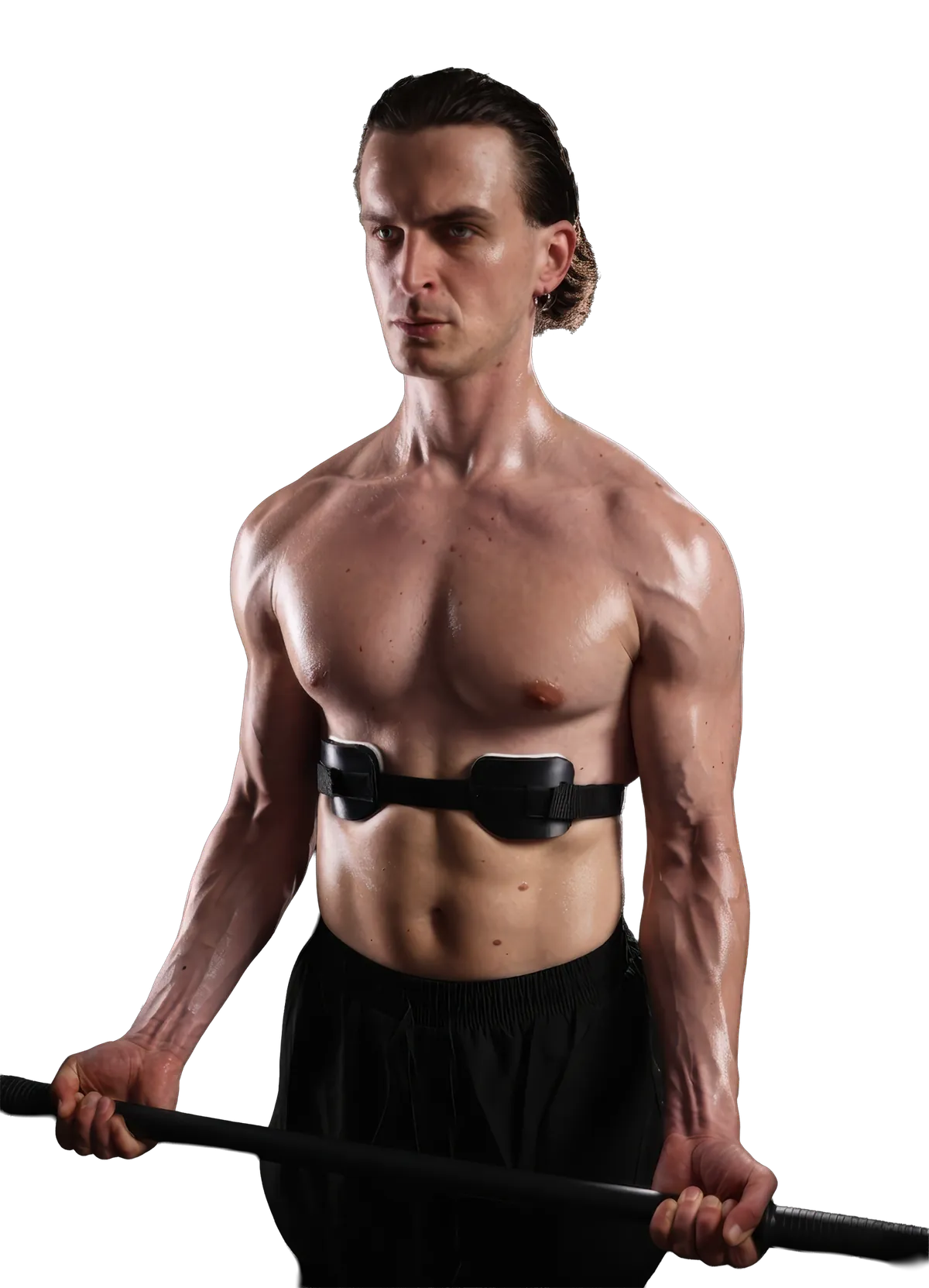
Why posture work never closed your flare, and what actually does.
Rib flare is driven by breathing, core function and habit. Re-pattern those and the ribs follow.




Your ribs flare and
nothing touches it.
Most rib flare advice is generic posture content that misses the specific breathing and core mechanics involved. Here's why your efforts haven't moved it, and what does.
Your breath shapes your ribs
20,000 times a day.
A chest-dominant habit reinforces the flared position with every one of those breaths. Re-pattern the breath, restore the deep core, and the lower ribs finally have a reason to come down, and stay down.
Backed by the research,
not just my opinion.
Transformations & Real Stories
Read them by rating, or by what people actually got out of it - the transformations, the honest reviews, and the messages that land in my inbox every week.
across 35 rated statements
500+ reviews collected since 2015. Open a bar, a tag or a condition to read the published ones.
What the 4.8 is made of
45 published statements · 500+ collected since 2015
- ★★★★★
Had rib flare since i was a teen. the brace plus the breathing drills changed everything. my waist looks normal in a fitted shirt for the first time in my adult life
Daniel K. Rib Flare 27
Rib Flare Brace Bristol, UK 🇬🇧
- ★★★★★
the breathing protocol alone changed how i feel day to day. didnt realise how shallow i was breathing until i fixed it. the rib flare correction kind of followed on its own
Sam B. Rib Flare 21
Rib Flare Course Oregon, USA 🇺🇸
- ★★★★★
the course structure is exactly what i needed. not overwhelming, not vague. each module builds on the last and you always know what to do next
Jake M. Rib Flare 23
Rib Flare Course Texas, USA 🇺🇸
- ★★★★★
what sold me is that every claim links to a study. only place online that treats pectus like an actual training problem instead of selling a miracle
David P. Rib Flare 34
Read the blog Rotterdam, Netherlands 🇳🇱
- ★★★★★
dip and flare at the same time. THE FLARE WENT FIRST, which nobody warned me would happen, and that alone changed my whole silhouette
Bruno Salgado PE + Rib Flare 30
1-on-1 Coaching São Paulo, Brazil 🇧🇷
- ★★★★★
brace did its job on the flare. what i actually wanted was how to run it alongside the vacuum bell work in the same week. asked and got a proper answer same day, but that should be in the material, not something you have to know to ask for
Otto PE + Rib Flare 25
Rib Flare Brace Tampere, Finland 🇫🇮
- ★★★★★
Everyone i asked just told me to do more core. turns out i was breathing into my neck this whole time. learning to actually use my diaphragm was the entire fix
Georgia Rib Flare 24
Rib Flare Course Perth, Australia 🇦🇺
- ★★★★★
started out flat on my back every night checking whether my ribs still stuck up, they always did. got the rib flare program and actually did the breathing side properly this time instead of just the exercises. four months later i lie down and theyre flat - i still check out of habit and still cant quite believe it
Hanna Rib Flare 22
Rib Flare Program Malmö, Sweden 🇸🇪
- ★★★★★
the fortnightly check-ins are the only reason im still doing this. left on my own id have quit around week 3, easy
Katarina Rib Flare 31
1-on-1 Coaching Split, Croatia 🇭🇷
- ★★★★★
obsessed with watching that number drop every month ngl. 10/10
marta_v Rib Flare 25
The app Valencia, Spain 🇪🇸
- ★★★★★
clear, cited, actually practical. heavy going in the anatomy chapters if you have no background, but id rather be given too much than too little
Aisha M. Rib Flare 27
Rib Flare Brace Guide Dubai, UAE 🇦🇪
- ★★★★★
material's good and i have no issue with the science. my honest gripe is the early modules cover the same ground as the free blog posts, which id already read before buying. the later phases are where the real value sits. wouldve paid the same to skip straight to those
Stefan Nagy Rib Flare 34
Rib Flare Course Budapest, Hungary 🇭🇺
- ★★★★★
I came across your blog about a year ago and I just want to say how much you've changed my life for the better. I thought it was going to be another average article, but the tips you gave were things I hadn't heard of before. Now I've improved so much and im more confident then ever.
Cristian PE 17
Read the blog USA 🇺🇸
- ★★★★★
Mihail doesnt sugarcoat anything. told me exactly what to expect and exactly how long it would take. 12 months in and my carinatum is flat. i finally take my shirt off at the beach
Aiden R. PC 19
1-on-1 Coaching Melbourne, Australia 🇦🇺
- ★★★★★
spent two years researching surgery before i found this. six months in and i wish id found it sooner. the progress photos dont lie
Tom W. PE 24
Pectus Excavatum Course Manchester, UK 🇬🇧
- ★★★★★
Was skeptical, id tried everything before. the custom vacuum bell was different to anything id used. three months of consistent use and i can already see the sternum coming up
Chris L. PE 31
Vacuum Bell Toronto, Canada 🇨🇦
- ★★★★★
The carinatum brace is really well made. fits perfect to my chest and i can wear it under a t-shirt at work. results started showing around 4 months
Nico P. PC 17
Pectus Carinatum Brace Milan, Italy 🇮🇹
- ★★★★★
direct, no nonsense. mihail knows this condition better than any doctor ive seen. my GP was shocked when i showed him my 9 month comparison photos
Ryan H. PE 29
1-on-1 Coaching Dublin, Ireland 🇮🇪
- ★★★★★
been watching mihails youtube since 2017. finally bought the program in 2023 and kicked myself for waiting. shouldve trusted him years earlier
Liam O. PE 26
PE Exercise Program Auckland, New Zealand 🇳🇿
- ★★★★★
My son is 15 and was getting self-conscious at the pool. The carinatum brace and the fortnightly check-ins are what kept him consistent. Six months and the ridge has visibly dropped.
Parent of Ethan PC 15
Pectus Carinatum Brace Michigan, USA 🇺🇸
- ★★★★★
Seven months with the bell now. dip is maybe half what it was and i've stopped turning sideways away from people at the gym lol. didnt expect that part
Tobias PE 24
Vacuum Bell Hamburg, Germany 🇩🇪
- ★★★★★
started at 19 with a chest i couldnt look at in the mirror. went with the excavatum course cus everyone kept telling me nothing but surgery works and i didnt buy it. 5 months of doing the work most days and my chest sits noticeably flatter now - the surgeon who told me wait and see at 17 wouldnt recognise it. only regret is i didnt start the day i turned 17
Wes PE 19
Pectus Excavatum Course Colorado, USA 🇺🇸
- ★★★★★
Nine months in and my cardiologist literally asked what id changed. resting heart rate came down and i sleep breathing through my nose now. still kind of wild to me
Andrés Vásquez PE 31
1-on-1 Coaching Santiago, Chile 🇨🇱
- ★★★★★
1100 pages sounded ridiculous til i realised its a reference not a book you read front to back. im in the vacuum bell chapters basically every day
callum_g PE 22
Breathe Deeper Glasgow, Scotland 🏴
- ★★★★★
Back and rear delt work changed how my chest reads more than anything i did to the actual chest. did NOT expect to be told that
Dmitri PE 29
PE Exercise Program Riga, Latvia 🇱🇻
- ★★★★★
App keeps me honest ngl. i log the bell session and it tells me when ive earned the next step up. before this i was just guessing
Joon-ho Park PE 26
The app Seoul, South Korea 🇰🇷
- ★★★★★
my mum found mihail tbh. four months of coaching and the difference between the photos is obvious. never had to sit in front of a surgeon
Tomás Ferreira PE 17
1-on-1 Coaching Porto, Portugal 🇵🇹
- ★★★★★
gaining weight was the bit nobody would explain to me. 3 months on the nutrition plan, 5kg up, and the same chest reads completely different at that weight
Felix PE 28
Pectus Nutrition Program Graz, Austria 🇦🇹
- ★★★★★
It works. the suction takes getting used to and i gave myself a bit of skin bruising the first fortnight, until i dropped the pressure back to what the guide actually says. my fault not theirs
Marc-Antoine PE 33
Vacuum Bell Quebec, Canada 🇨🇦
- ★★★★★
honest review. 5 months of consistent bell use and my depth has barely moved. im 35 and my chest wall is stiff, which the guide does warn about upfront. the posture and breathing side genuinely helped and i dont regret the money, but i wouldnt tell someone my age to expect what the teenagers are getting
Nikolai PE 35
Vacuum Bell Guide Sofia, Bulgaria 🇧🇬
- ★★★★★
Wore it 8 hrs a night for 5 months. the ridge is basically gone. im 16 so i got lucky on timing, but you still have to wear it every single night. beat the operation they were lining us up for
Elias PC 16
Pectus Carinatum Brace Bergen, Norway 🇳🇴
- ★★★★★
The wear-schedule chapter is honestly the whole product. everywhere else online just goes "wear a brace" and leaves you to figure out the rest
hamza PC 20
Pectus Carinatum Course Casablanca, Morocco 🇲🇦
- ★★★★★
spent two years hiding the ridge under hoodies before i actually did anything about it. what changed it was the carinatum program - building the chest and back around the ridge instead of just bracing and hoping. six months in and it reads flat enough that the hoodies are gone
Rafael PC 22
PC Exercise Program Cebu, Philippines 🇵🇭
- ★★★★★
He replied to my messages same day, every time. at 17 with a chest you hate, that matters way more than the plan does honestly
Théo PC 17
1-on-1 Coaching Ghent, Belgium 🇧🇪
- ★★★★★
solid guide and the pressure numbers are genuinely useful. half a star off cus im 28 and the whole thing is pitched at teenagers. an adult section, where the timelines are honestly different, wouldve been worth a lot to me
Jonas B. PC 28
Carinatum Brace Guide Aarhus, Denmark 🇩🇰
- logged case
Nine months, 5.7 kg of muscle on, and 0.9 cm off the depth of my chest. I am 32. I had been told the window for fixing this closed at 18.
Liam PE + Rib Flare 32
Seattle, WA 🇺🇸
- logged case
I came in skinny with a deep dip and ribs that flared out. Six months later I am 4.5 kg heavier, and the flare is the part people notice is gone.
Ian PE + Rib Flare 22
Canada 🇨🇦
- logged case
The brace handled the flare, the training filled out the chest. 6 kg on and 0.9 cm less depth in seven months. I wear fitted shirts now.
Alejandro Sanz Torres PE + Rib Flare 29
Bilbao, Spain 🇪🇸
- logged case
Five months, 4 kg up. The dip is still there if I go looking for it, but nobody else finds it anymore.
Lars PE + Rib Flare 25
Sweden 🇸🇪
- logged case
Two months in and I've put on 3.2 kg of muscle. My chest doesn't cave the way it used to when I'm standing relaxed, and that alone was worth it.
Milo PE 25
Germany 🇩🇪
- logged case
I am 52 and carried both a ridge and a dip my whole life. Dropped 9 kg in five months and my chest finally reads as one shape instead of two.
Greg Henderson PC + PE 52
Ohio, USA 🇺🇸
- logged case
Three months, 5 kg on, and the ridge sits lower than it ever has. At 19 I thought surgery was the only thing that would fix it.
Ethan PC 19
North Carolina, USA 🇺🇸
- logged case
Nine kilos in six months. Building the muscle around the ridge did more for how it looks than the years I spent hiding it under loose shirts.
Omar Al Mansoori PC 24
Abu Dhabi, UAE 🇦🇪
- logged case
Four months of coaching and the ridge you could see from the side has flattened out. I stopped checking my profile in every window I walk past.
Beau PC 30
Missouri, USA 🇺🇸
- logged case
My carinatum was the first thing I saw in every photo of myself. Now I have to point it out to people. Same chest, trained differently.
Taras Bondarenko PC 29
Czech Republic 🇨🇿
"Had rib flare since i was a teen. the brace plus the breathing drills changed everything. my waist looks normal in a fitted shirt for the first time in my adult life"
"the breathing protocol alone changed how i feel day to day. didnt realise how shallow i was breathing until i fixed it. the rib flare correction kind of followed on its own"
"the course structure is exactly what i needed. not overwhelming, not vague. each module builds on the last and you always know what to do next"
"what sold me is that every claim links to a study. only place online that treats pectus like an actual training problem instead of selling a miracle"
"I came across your blog about a year ago and I just want to say how much you've changed my life for the better. I thought it was going to be another average article, but the tips you gave were things I hadn't heard of before. Now I've improved so much and im more confident then ever."
"Mihail doesnt sugarcoat anything. told me exactly what to expect and exactly how long it would take. 12 months in and my carinatum is flat. i finally take my shirt off at the beach"
"spent two years researching surgery before i found this. six months in and i wish id found it sooner. the progress photos dont lie"
"Was skeptical, id tried everything before. the custom vacuum bell was different to anything id used. three months of consistent use and i can already see the sternum coming up"
"The carinatum brace is really well made. fits perfect to my chest and i can wear it under a t-shirt at work. results started showing around 4 months"
"direct, no nonsense. mihail knows this condition better than any doctor ive seen. my GP was shocked when i showed him my 9 month comparison photos"
"been watching mihails youtube since 2017. finally bought the program in 2023 and kicked myself for waiting. shouldve trusted him years earlier"
"My son is 15 and was getting self-conscious at the pool. The carinatum brace and the fortnightly check-ins are what kept him consistent. Six months and the ridge has visibly dropped."
Had rib flare since i was a teen. the brace plus the breathing drills changed everything. my waist looks normal in a fitted shirt for the first time in my adult life
Shared with each client's permission.
Did I help you with your pectus?
Share your before & after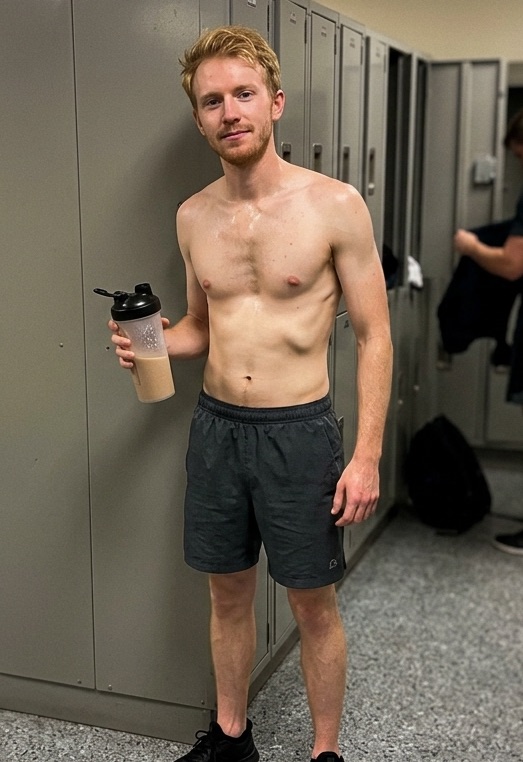
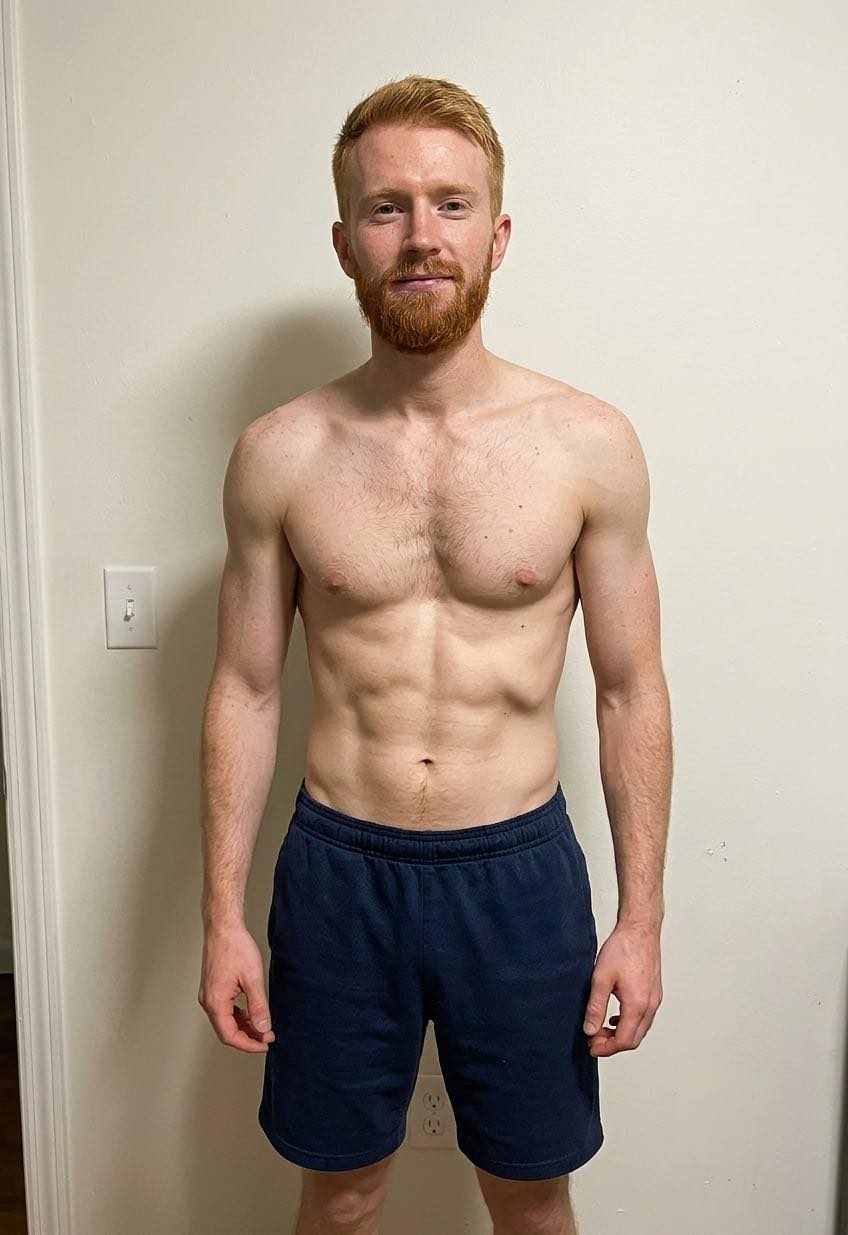
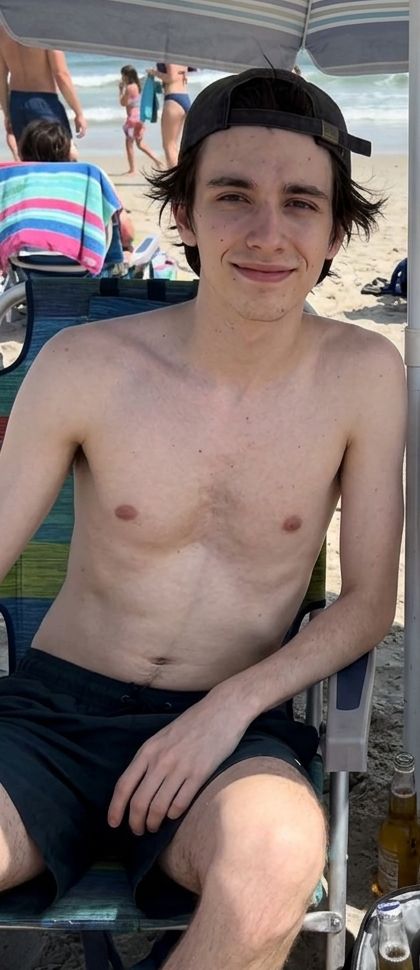
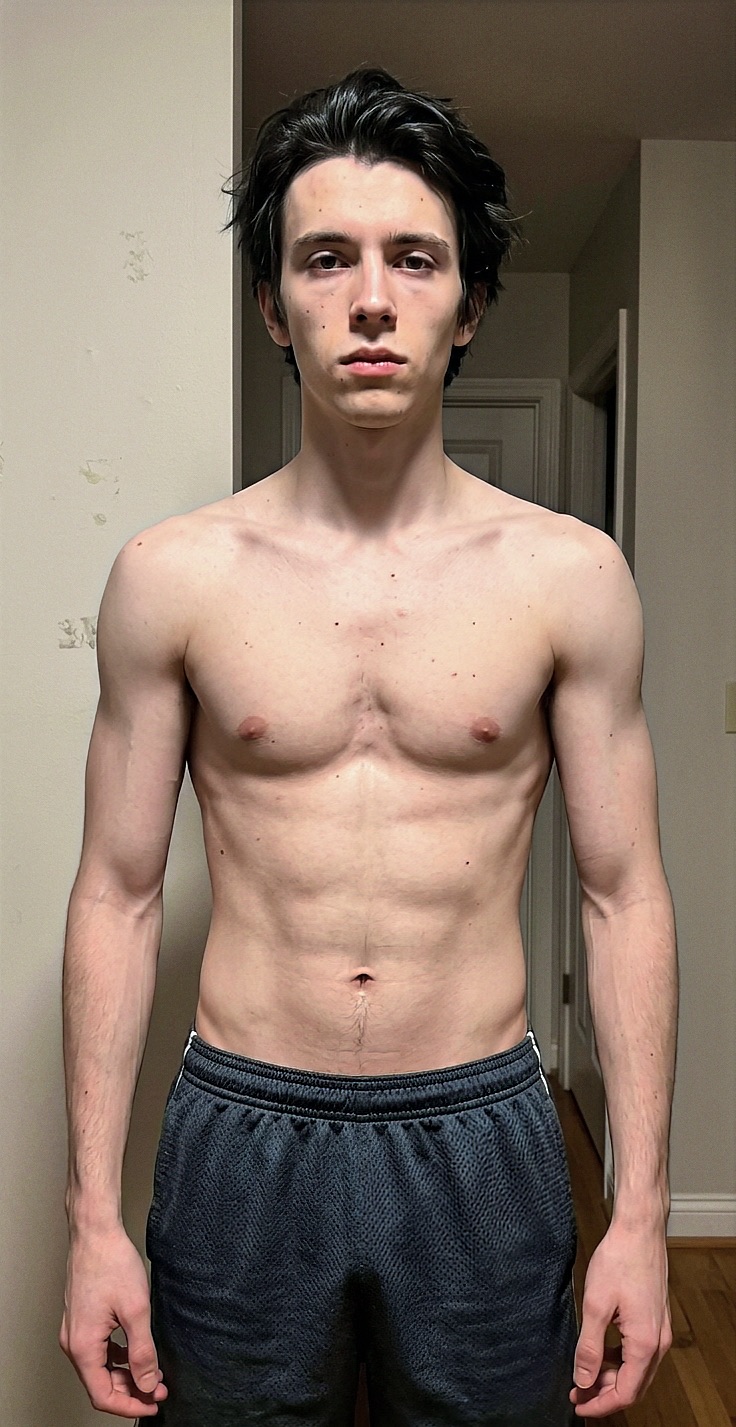
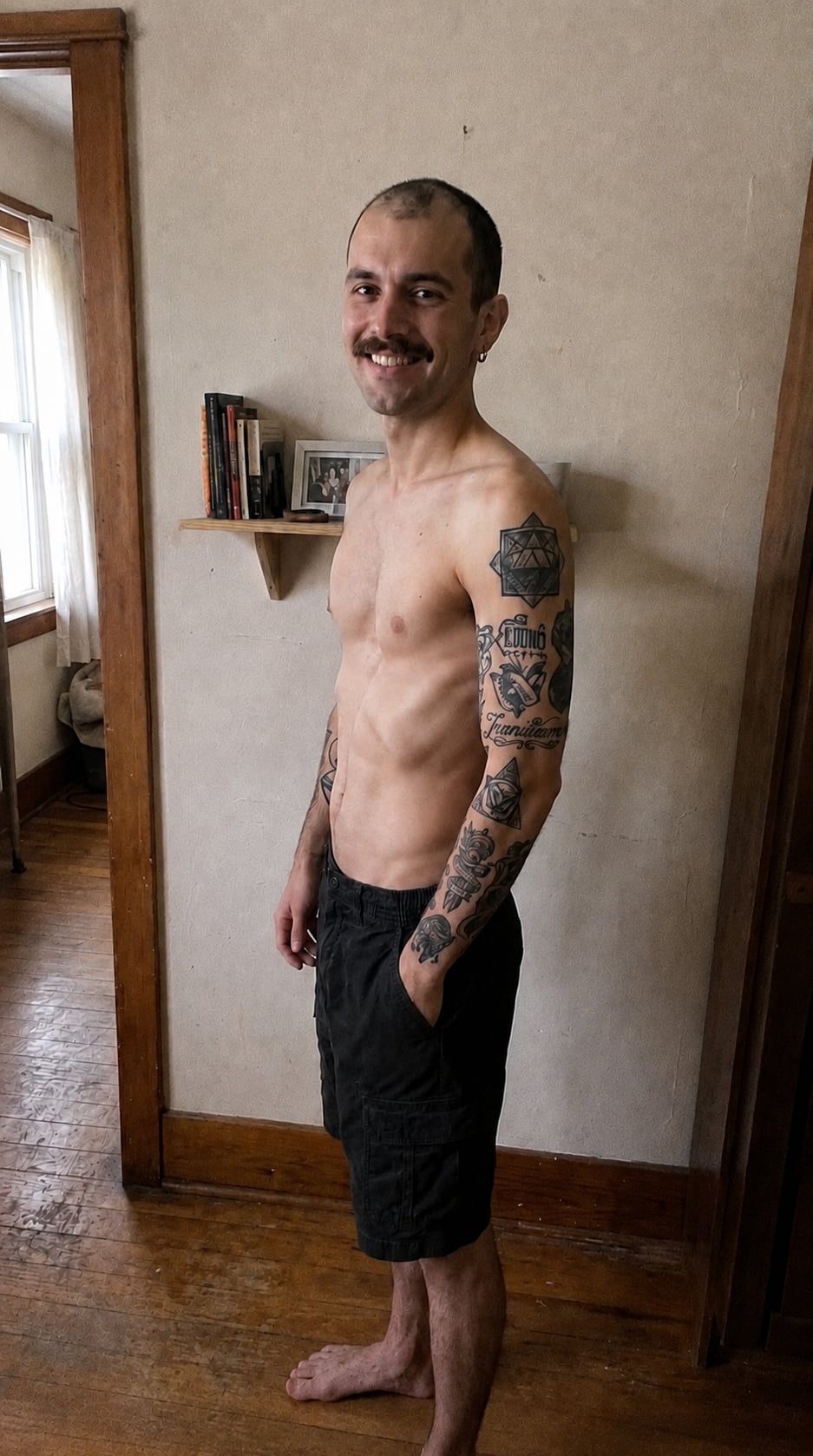
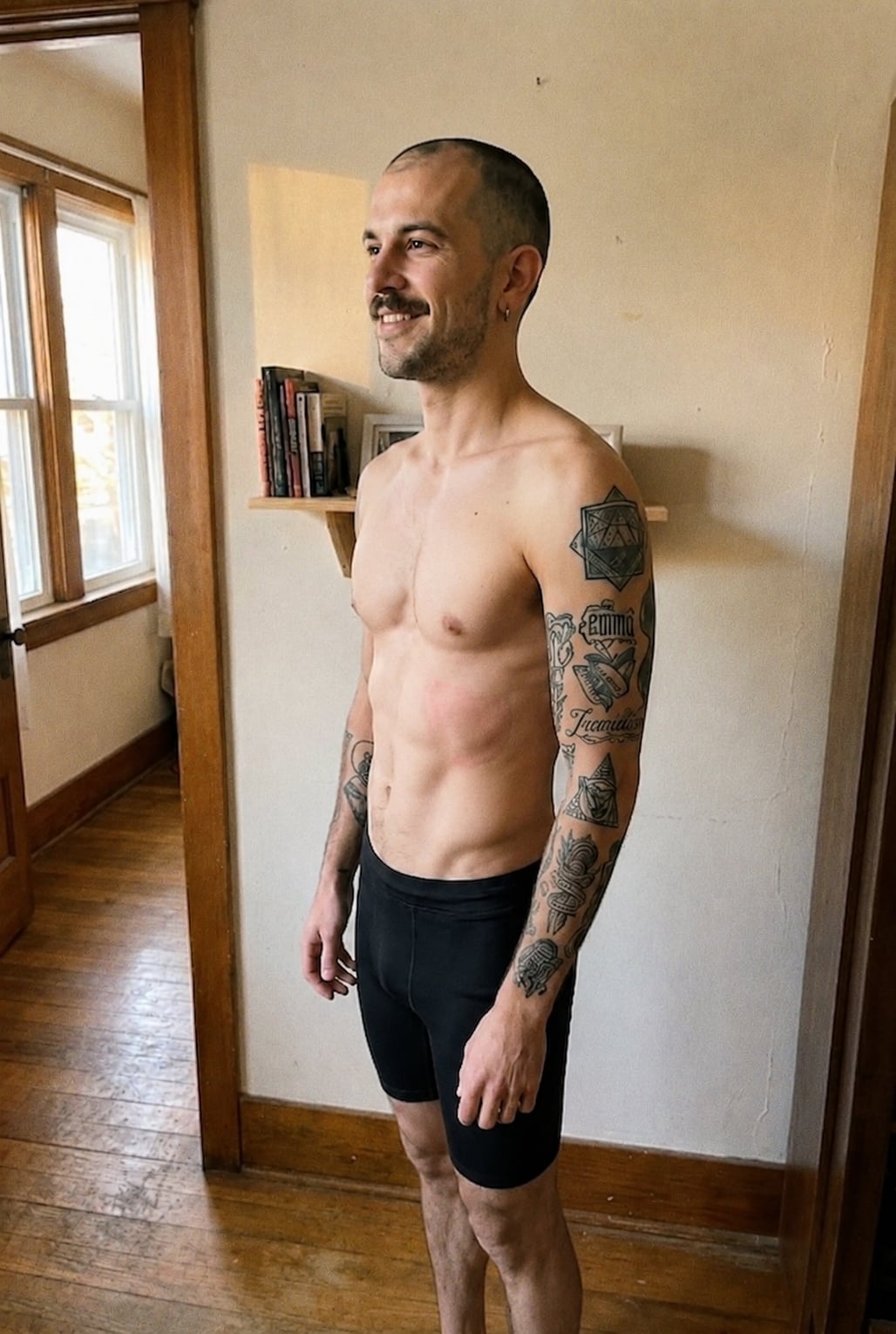
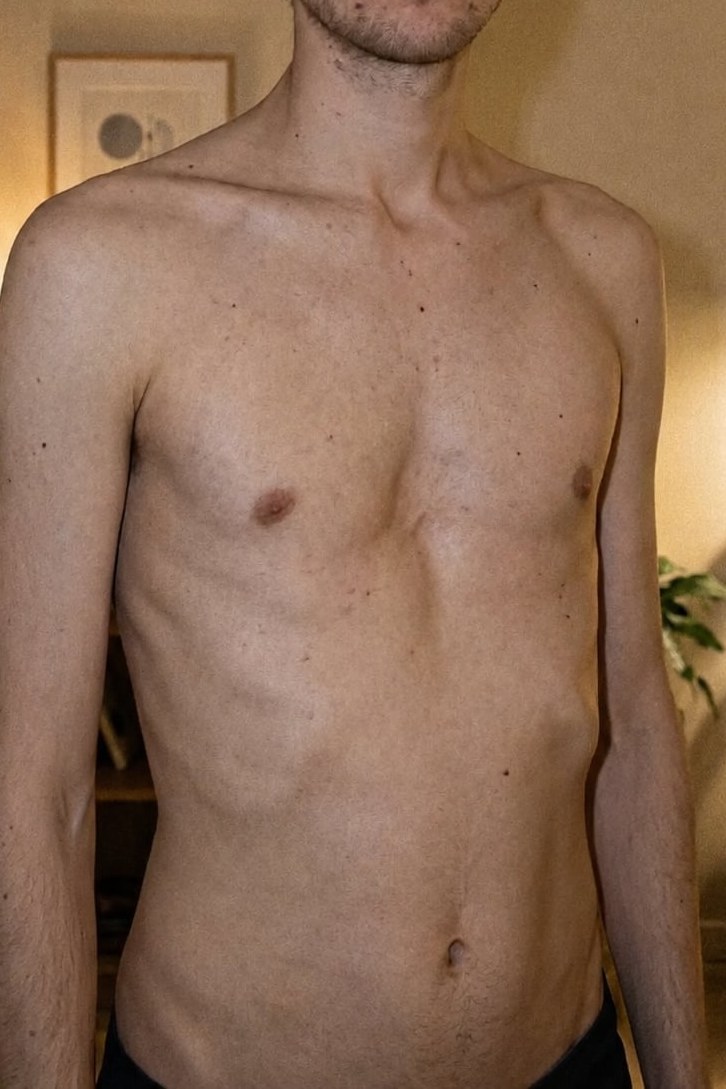
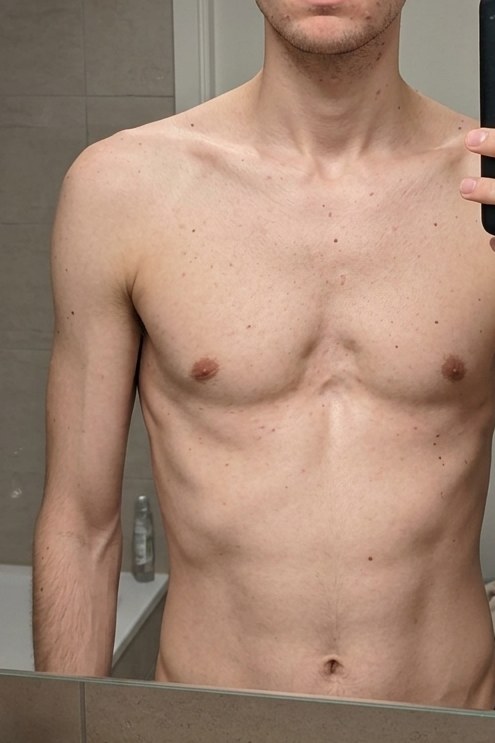
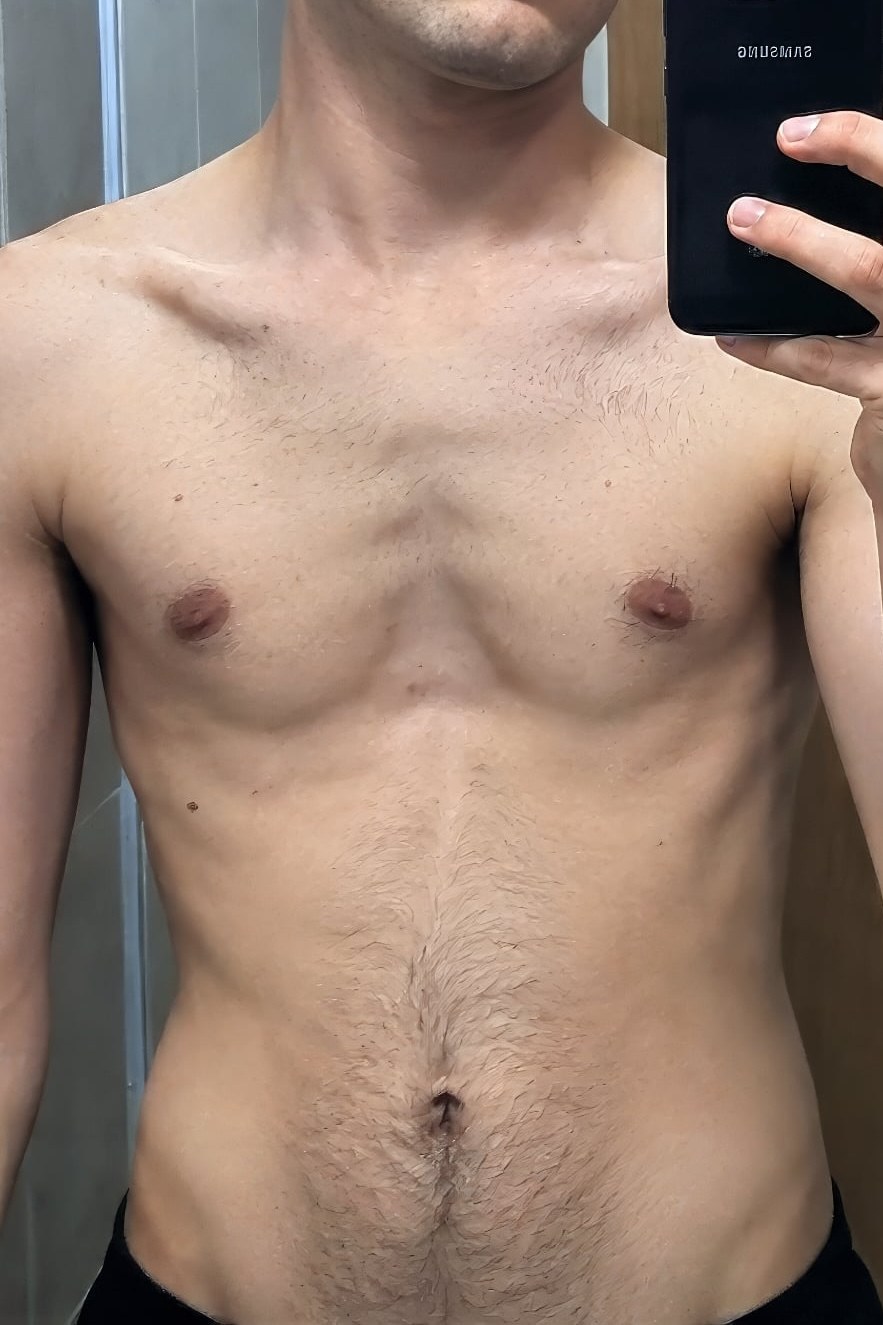
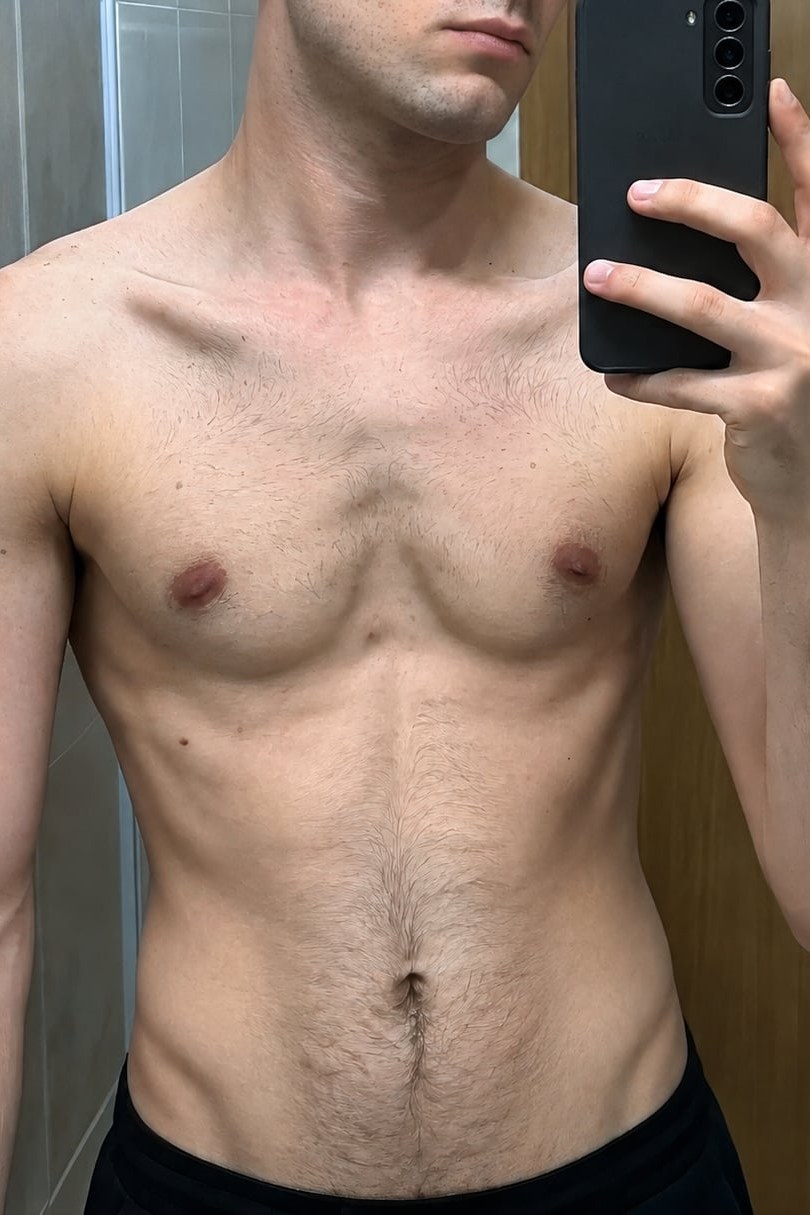
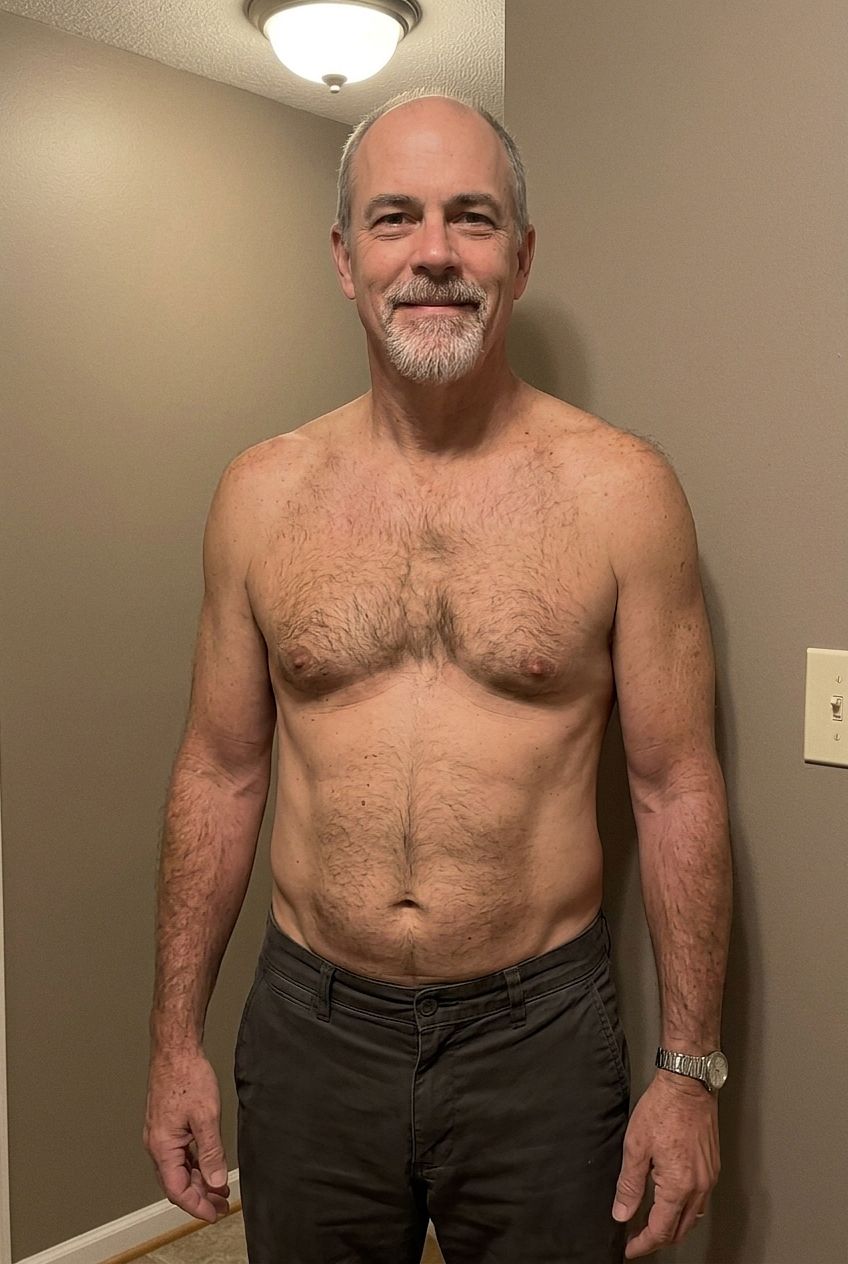
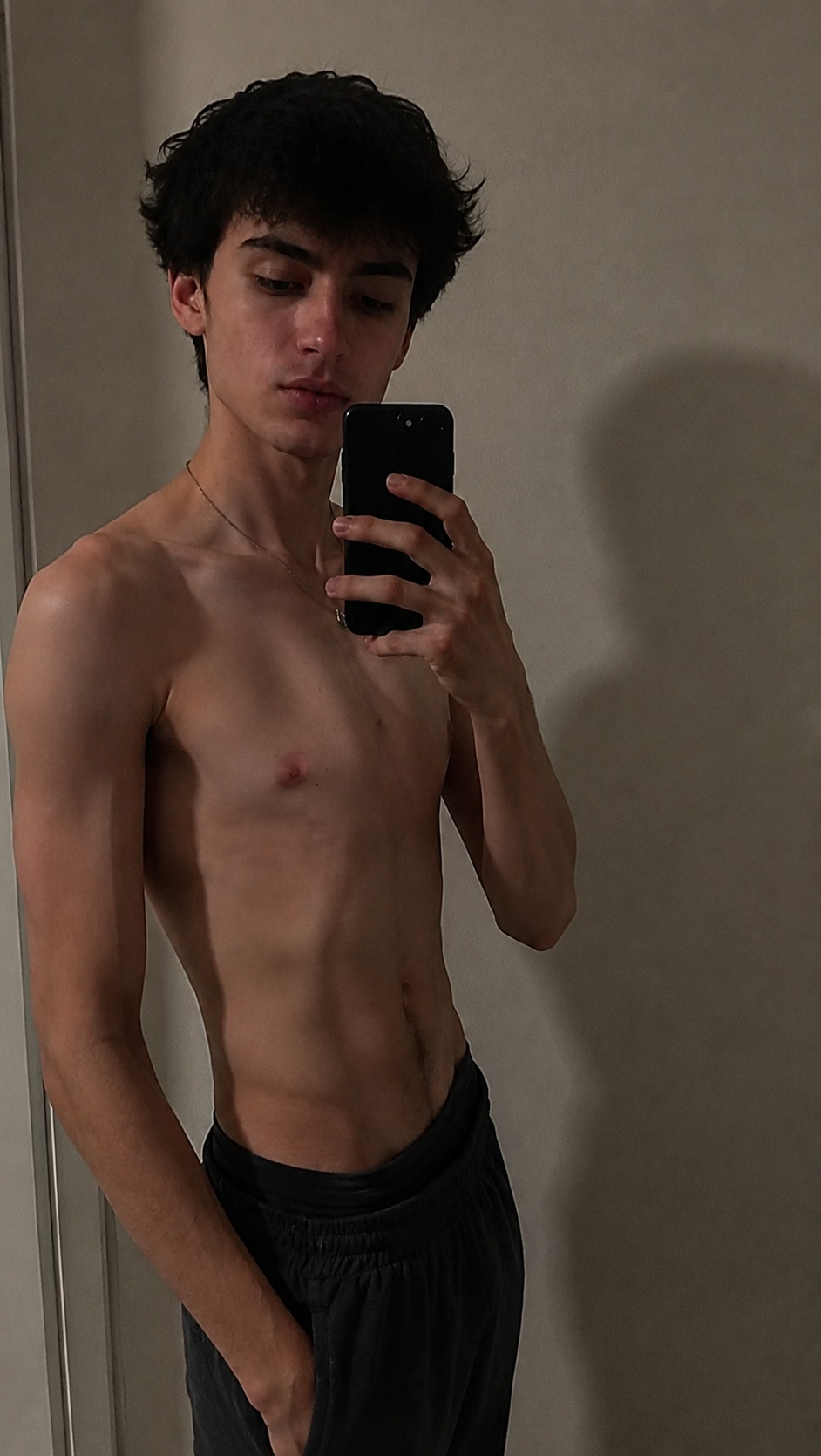
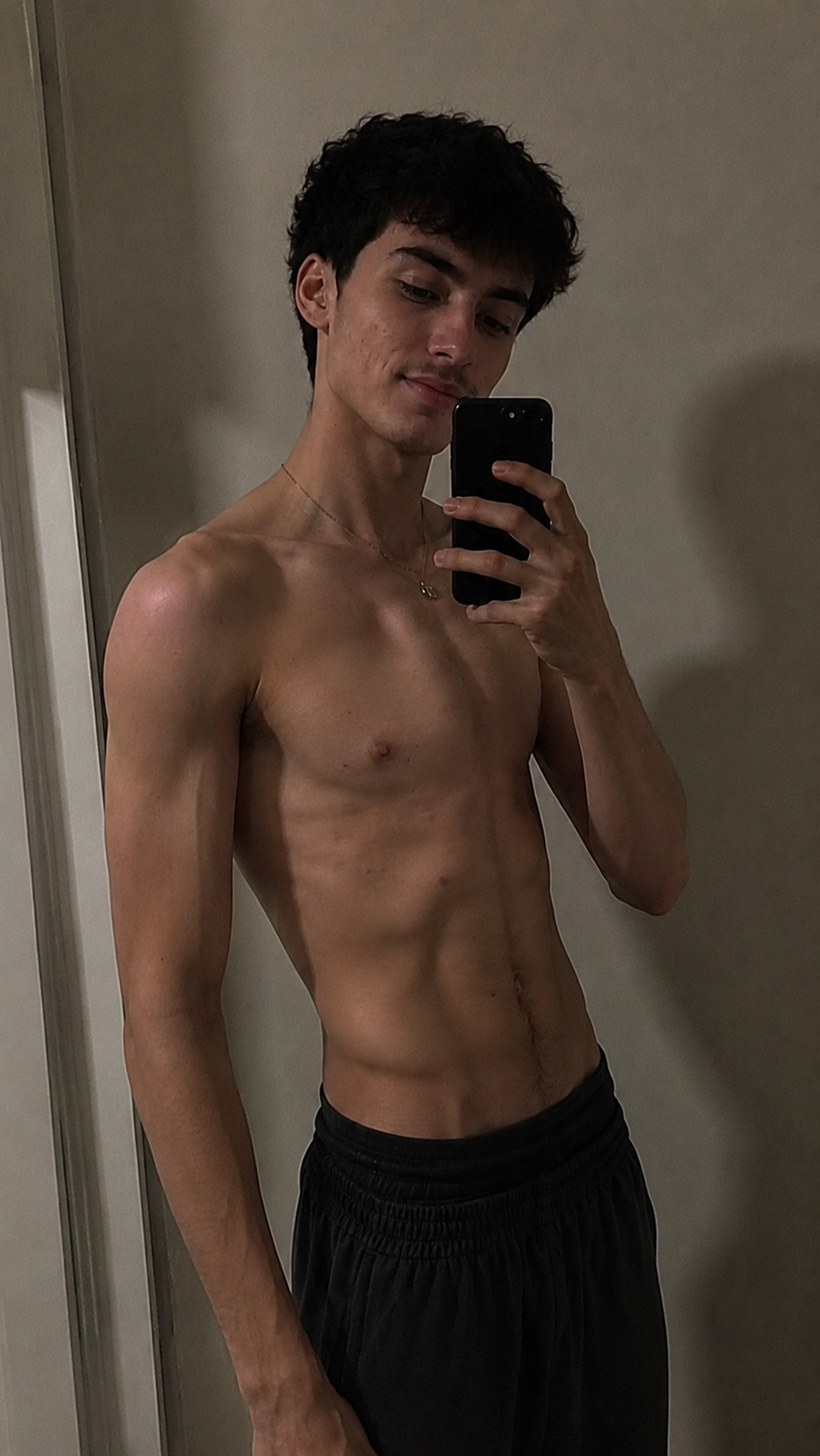
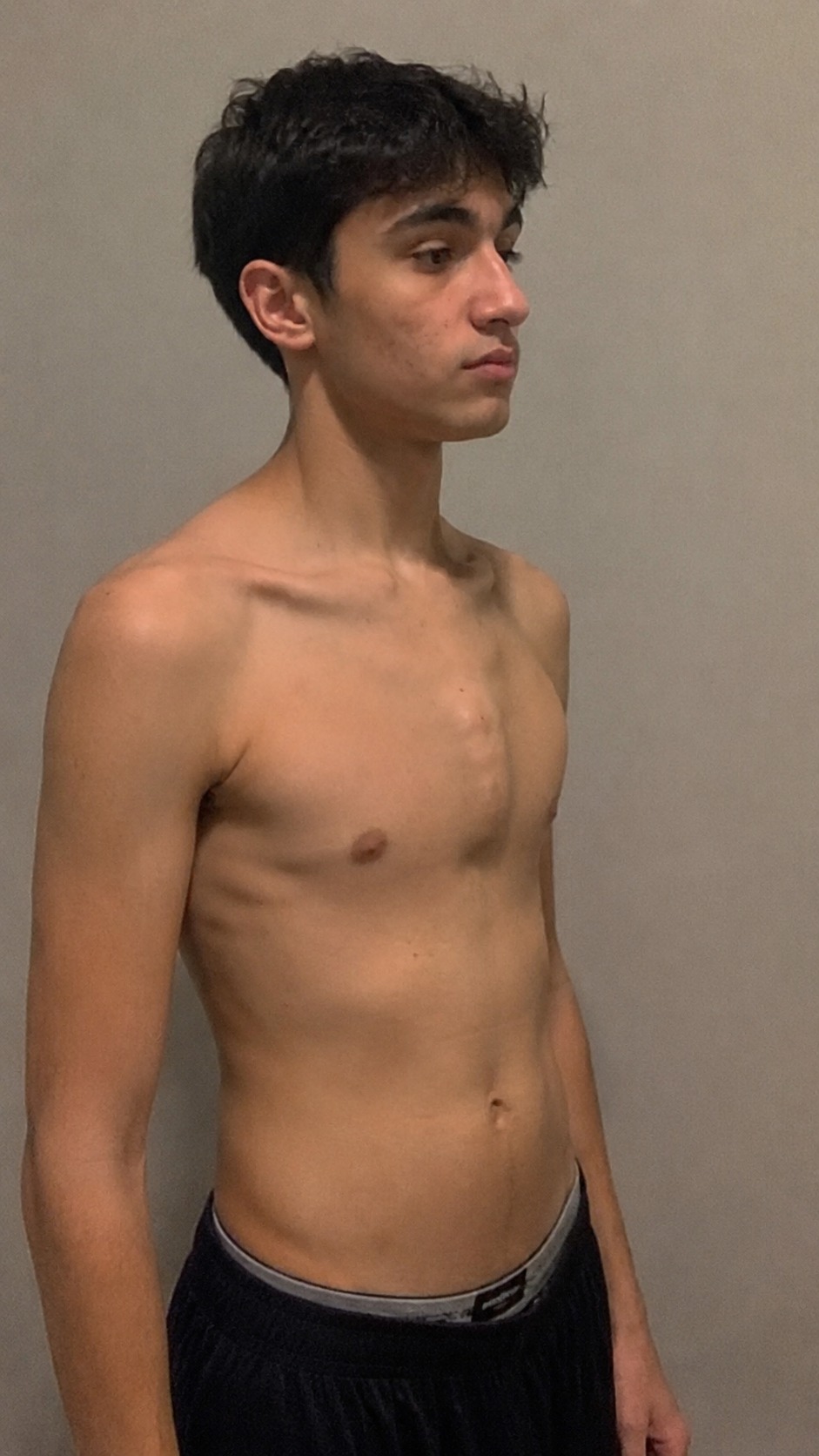
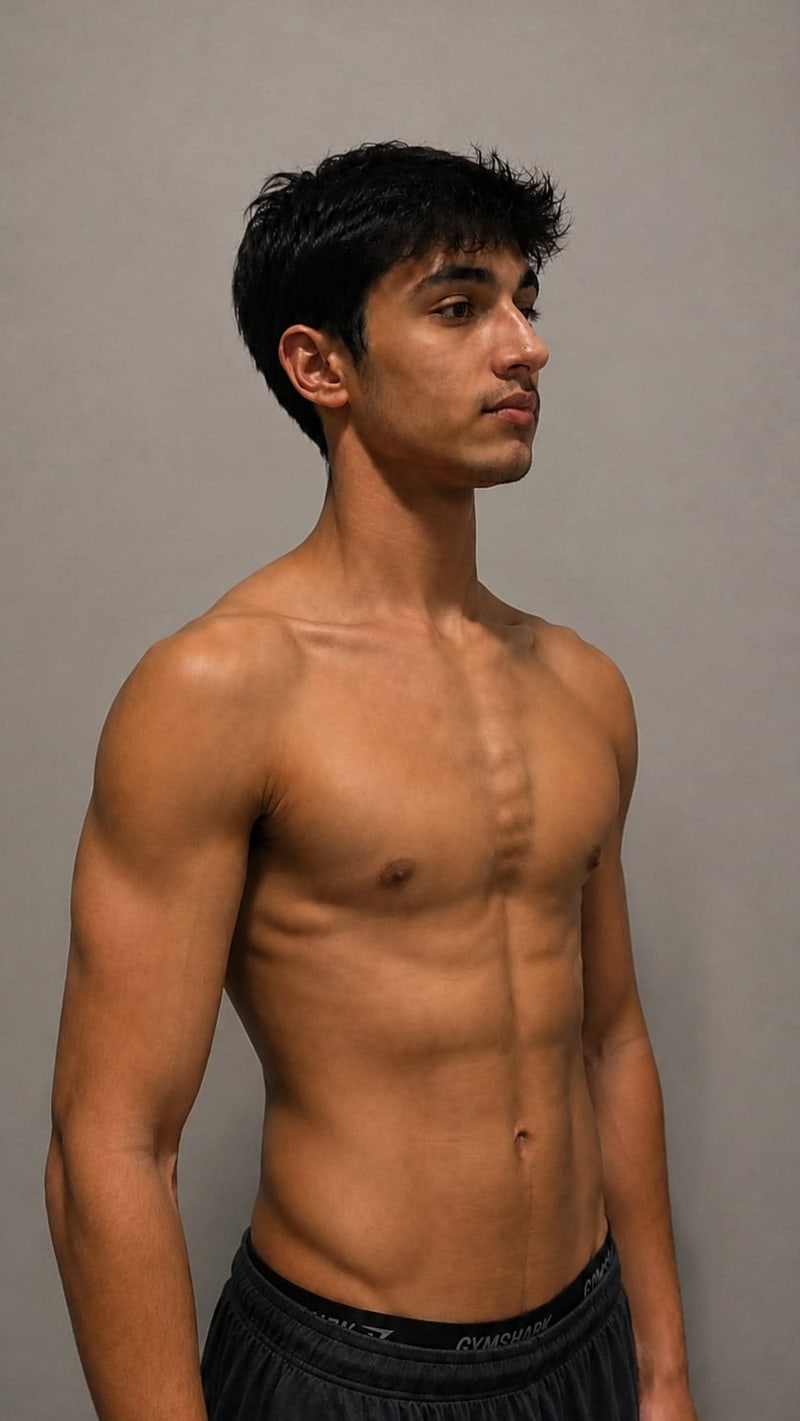
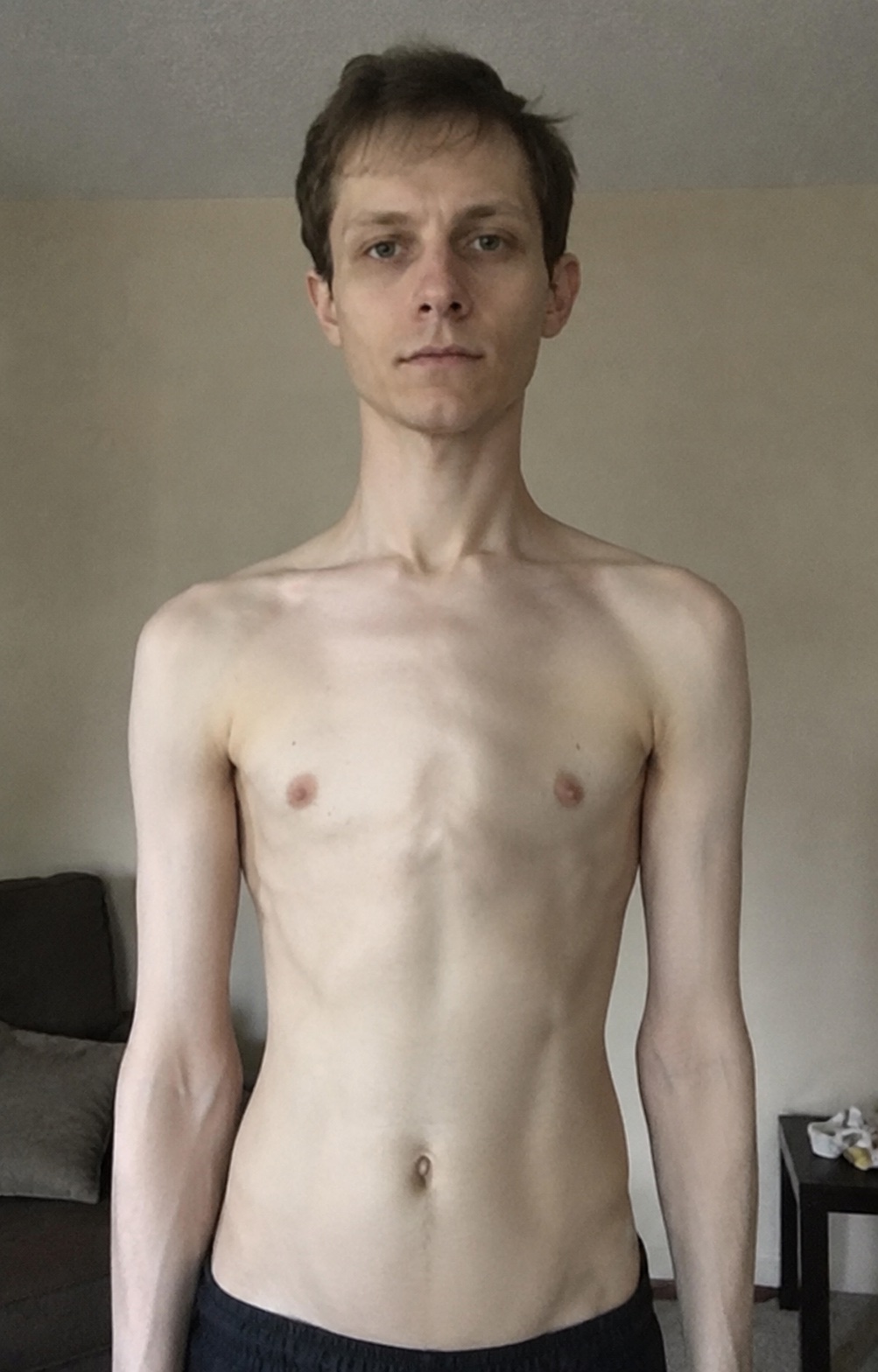
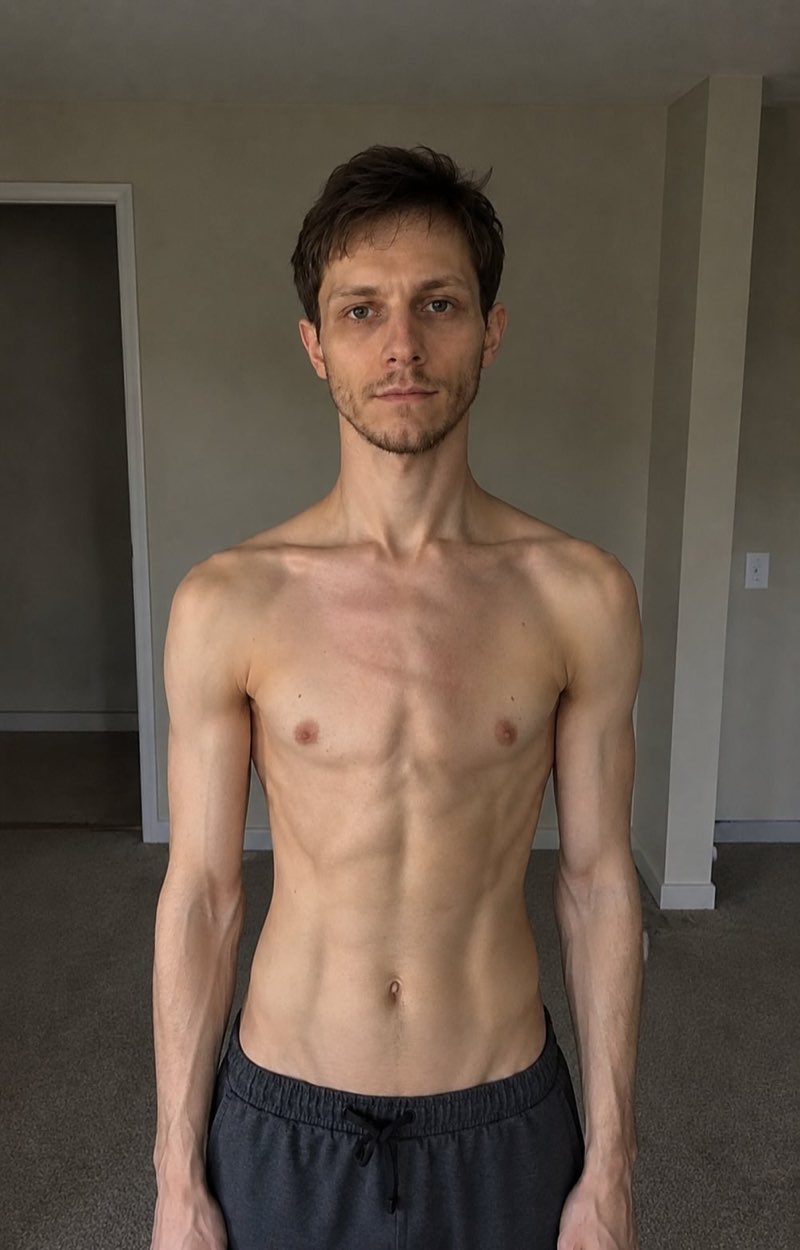
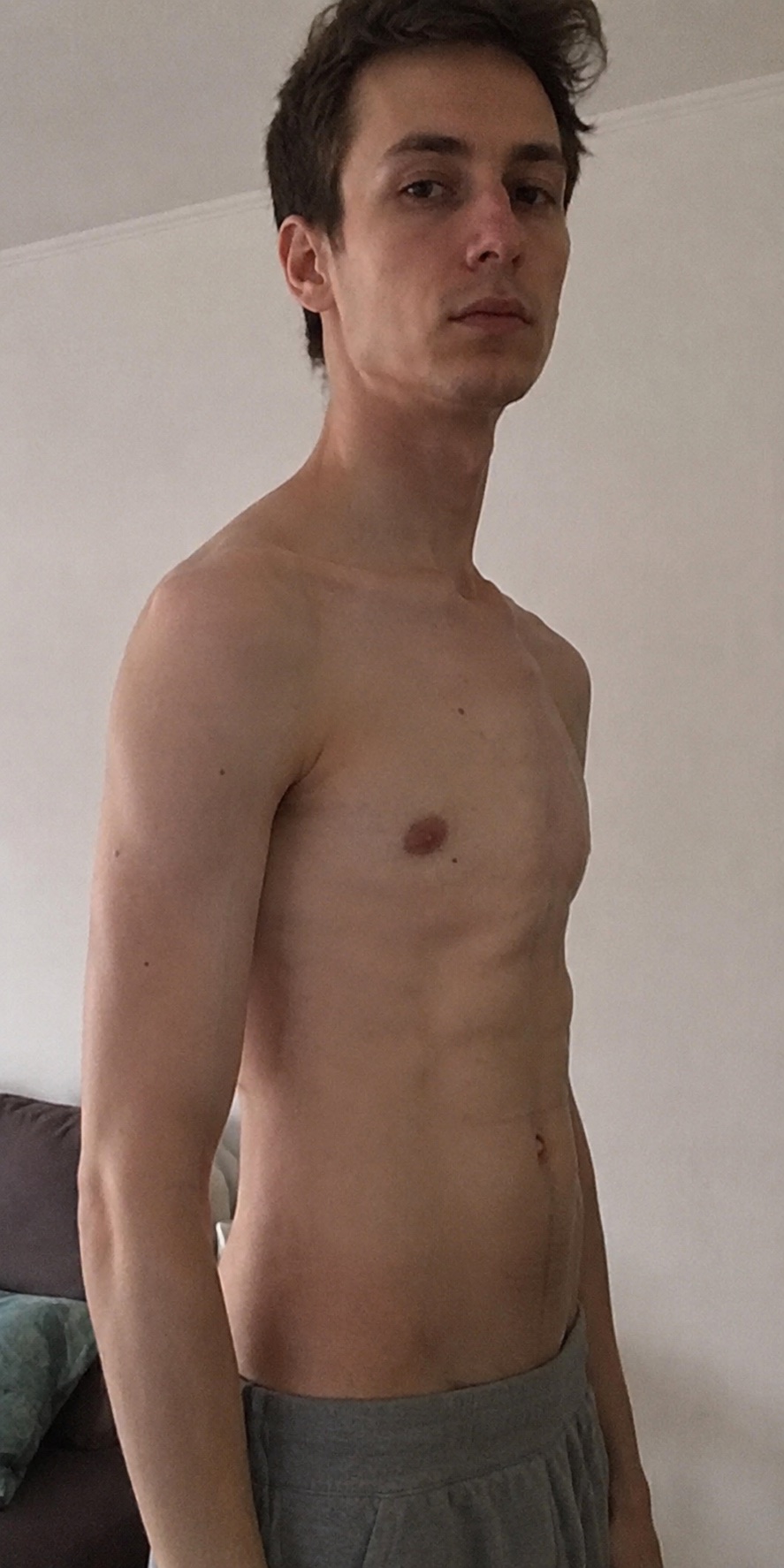
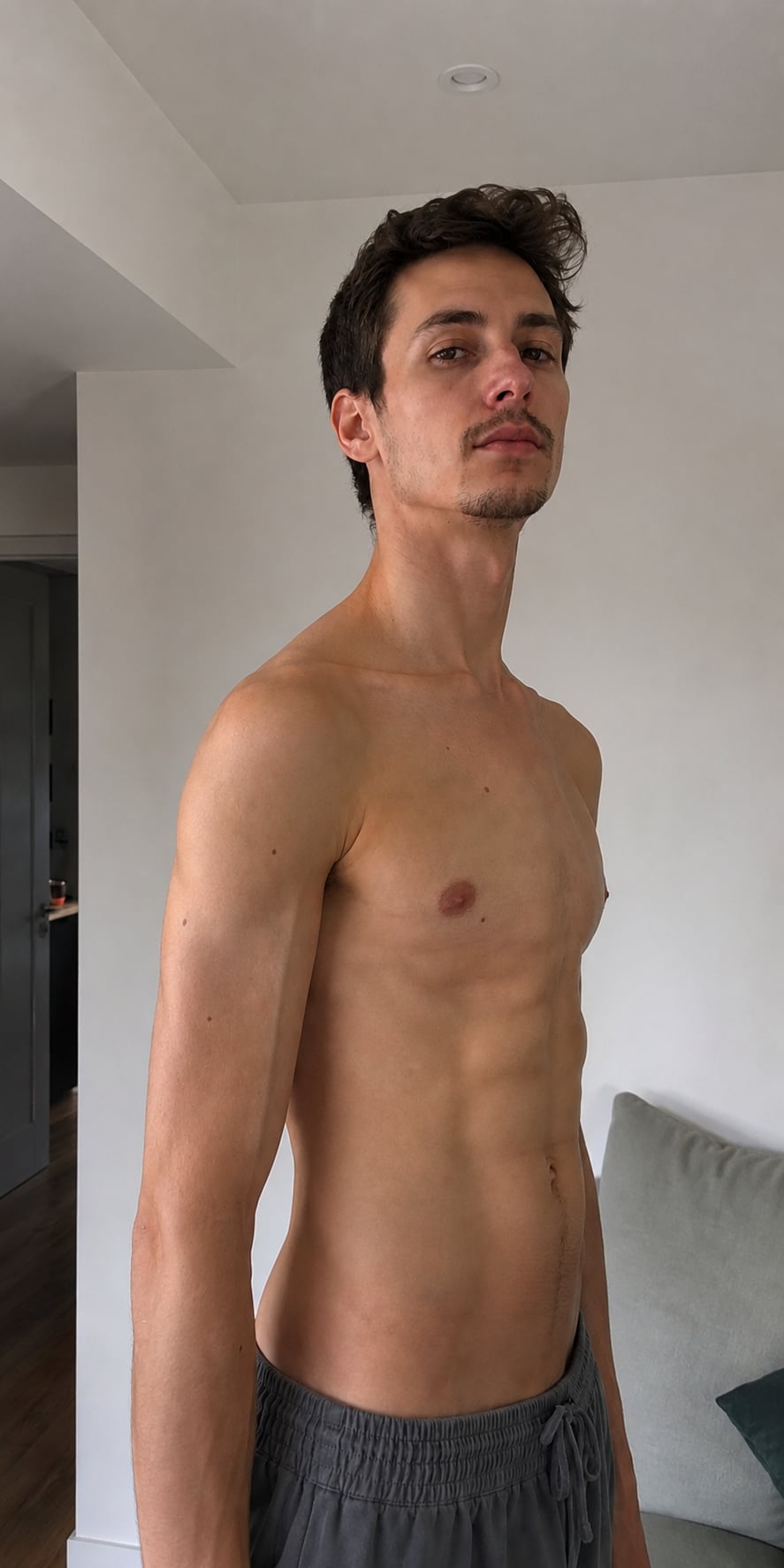
Drag each slider to compare. Published only with the client's written consent.
Medically reviewed by Prof. Dr. Mustafa Yüksel
Tap any message to read it full size. Instagram, Facebook, YouTube & TikTok comments, DMs, WhatsApp and email - real messages from real clients. Names and handles blurred, content untouched.

“Nine months, 5.7 kg of muscle on, and 0.9 cm off the depth of my chest. I am 32. I had been told the window for fixing this closed at 18.”

“I came in skinny with a deep dip and ribs that flared out. Six months later I am 4.5 kg heavier, and the flare is the part people notice is gone.”

“The brace handled the flare, the training filled out the chest. 6 kg on and 0.9 cm less depth in seven months. I wear fitted shirts now.”
“Five months, 4 kg up. The dip is still there if I go looking for it, but nobody else finds it anymore.”
“Two months in and I've put on 3.2 kg of muscle. My chest doesn't cave the way it used to when I'm standing relaxed, and that alone was worth it.”

“I am 52 and carried both a ridge and a dip my whole life. Dropped 9 kg in five months and my chest finally reads as one shape instead of two.”

“Three months, 5 kg on, and the ridge sits lower than it ever has. At 19 I thought surgery was the only thing that would fix it.”

“Nine kilos in six months. Building the muscle around the ridge did more for how it looks than the years I spent hiding it under loose shirts.”

“Four months of coaching and the ridge you could see from the side has flattened out. I stopped checking my profile in every window I walk past.”

“My carinatum was the first thing I saw in every photo of myself. Now I have to point it out to people. Same chest, trained differently.”
What people ask
before they begin.
The four that come up most, answered the same way I would answer them on a call.
Take the 60-second quizHow long before I see a change? +
Posture and breathing shift first - most people feel that inside the first few weeks. Visible chest change is slower. In the case log above, Milo saw his first real change at 2 months, Ian at 6, Liam at 9. The programs run 16 weeks because that is roughly how long it takes for the training to show up in the mirror.
Am I too old for this to work? +
Almost certainly not. The clients documented on this page were 22 to 32 when they started. Cartilage does stiffen with age, so progress is slower the older you are - but slower is not the same as stopped. What changes is the timeline, not whether it is worth doing.
Do I need a gym, or can I do this at home? +
Either works. Every program ships with a gym track and a no-equipment track for the same 16 weeks, so you pick the one that matches what you actually have access to. You can switch between them mid-program without losing your place.
Pectus excavatum, carinatum, rib flare - is it the same plan? +
No, and that matters. A sunken chest and a protruding chest need close to opposite work, and rib flare often rides along with both. There is a separate program for each. If you are not sure which one you have, the 60-second quiz sorts it out and points you at the right starting place.
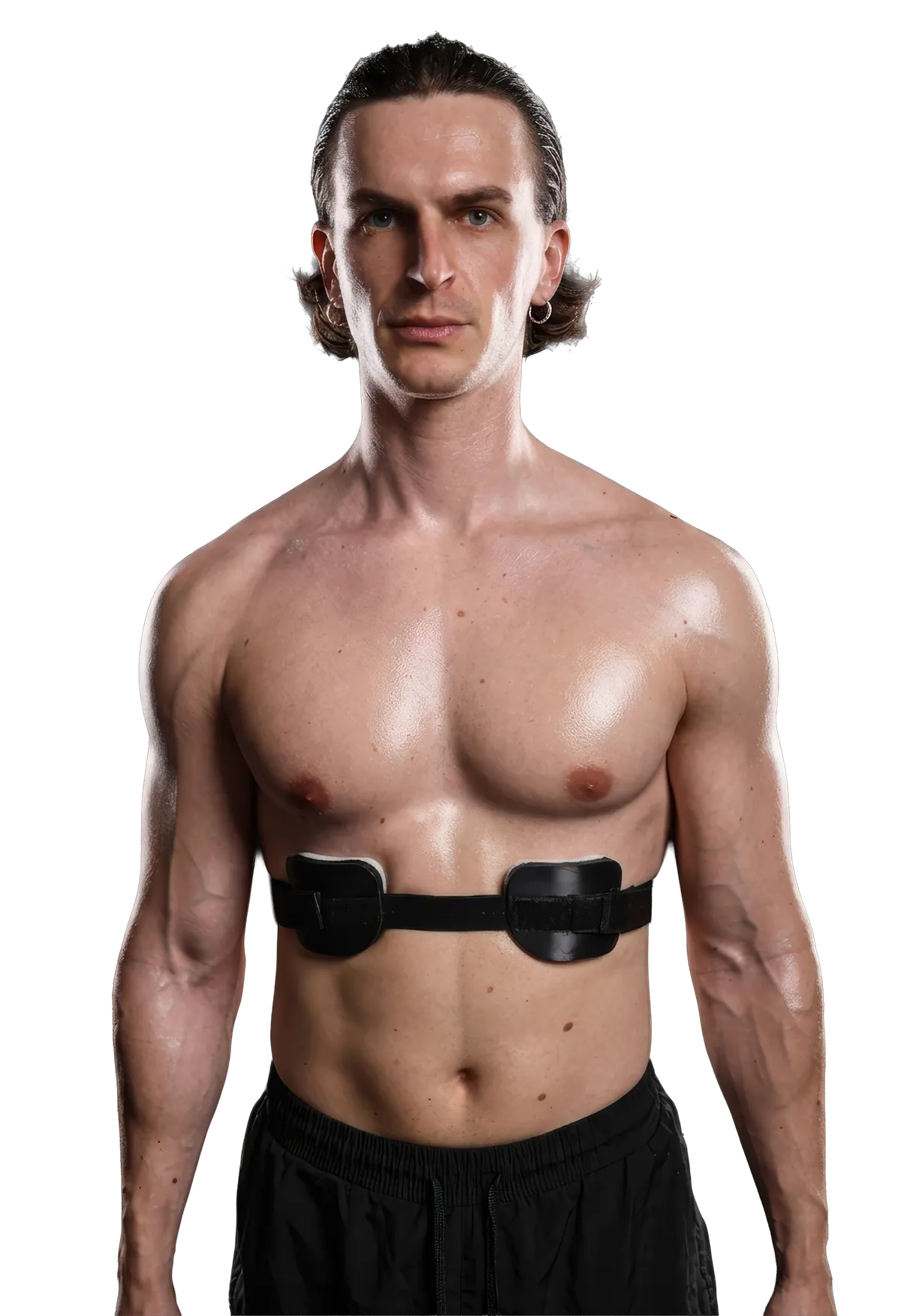
Eight connected modules.
One correction system.
Breathing first, then mobility, core, compression and loaded strength, in the order that closes the ribs and keeps them closed.
-
Rib Flare Anatomy & Functional Assessment Module 01
The three drivers (breathing pattern, core activation failure and postural habit) and how to identify which combination is yours.
- 01 The three drivers of flare
- 02 Breathing-pattern check
- 03 Core & postural assessment
- 04 Finding your combination
-
Diaphragmatic Breathing Reprogramming Module 02
The retraining sequence that addresses the chest-dominant pattern driving rib elevation, lateral expansion, posterior diaphragm activation and the breath mechanics that begin repositioning the ribs.
- 01 Undoing chest-dominant breathing
- 02 Lateral rib expansion
- 03 Posterior diaphragm activation
- 04 Breathing the ribs down
-
Intercostal & Thoracic Mobility Module 03
Opening the lateral chest wall and thoracic spine to create the physical space for rib closure, mobilisations, stretching and soft-tissue work specific to flare.
- 01 Lateral chest-wall opening
- 02 Thoracic spine mobility
- 03 Flare-specific stretching
- 04 Targeted soft-tissue work
-
Deep Core Activation for Rib Closure Module 04
Transverse abdominis activation in the correct ribcage position, oblique patterns that compress laterally, and the progression from isolated activation to loaded movement.
- 01 Transverse abdominis activation
- 02 The correct ribcage position
- 03 Lateral-compression obliques
- 04 Isolated to loaded progression
-
Compression Brace Protocol Module 05
If you use a brace, the wear schedule, tightening progression, positioning and the exercise pairings that make compression and training work together.
- 01 Brace wear schedule
- 02 Tightening progression
- 03 Correct positioning
- 04 Pairing brace with training
-
Postural Rebalancing & Daily Movement Module 06
The standing, sitting and movement habits that reinforce flare versus the positions that hold correction, building rib closure into daily life so it sticks.
- 01 Standing & sitting habits
- 02 Movement patterns that flare
- 03 Positions that hold closure
- 04 Building it into daily life
-
Loaded Progression & Strength Integration Module 07
Moving from corrective work to strength training with correct rib mechanics, the patterns that compound closure and the gym habits that undo it.
- 01 Corrective to strength work
- 02 Lifting with rib control
- 03 Patterns that compound closure
- 04 Gym habits that undo it
-
Measurement Protocol & Progress Milestones Module 08
Rib-angle measurement, intercostal width tracking and milestone checkpoints at weeks 4, 8 and 16 that confirm correction, or show what to adjust.
- 01 Rib-angle measurement
- 02 Intercostal width tracking
- 03 Checkpoints: weeks 4, 8, 16
- 04 Knowing what to adjust
What the first
30 days look like.
You re-pattern the breath first, the foundation everything else builds on, then layer in core and mobility.
Start the systemIdentify your specific flare pattern, take baseline rib-angle measurements and photos, and set your starting drills.
Install diaphragmatic, lateral-expansion breathing, the single change that makes everything else work.
Add deep-core activation and intercostal mobility so the ribs have both the cue and the space to come down.
Re-measure your subcostal angle against baseline, confirm progress, and step into loaded patterns with correct mechanics.
Everything you need to
close the flare.
The full contents,
nothing held back.
- Start
- Part 1Start here 01
- 01 How to use this program
- Part 2Understand 02–03
- 02 What rib flare is
- 03 Anatomy: the canister
- Part 3The science 04–07
- 04 Why ribs flare
- 05 The core that pulls ribs down
- 06 Breathing & the ZOA
- 07 Pelvis, glutes & the stack
- Part 4The framework 08
- 08 The Rib Flare Correction Pyramid
- Part 5Do it 09–14
- 09 Self-assessment
- 10 The daily reset plan
- 11 Make it less obvious (framing)
- 12 The 16-week program
- 13 Where bracing fits
- 14 Posture integration
- Part 6Go further 15–16
- 15 Troubleshooting & what to expect
- 16 Meditation & anxiety
- Part 7Reference 17–20
- 17 Exercise library
- 18 FAQ
- 19 References
- 20 Photo shot list
- Finish
Plus the full exercise library, the complete reference list, and the photo shot-list to track your rib angle over time.
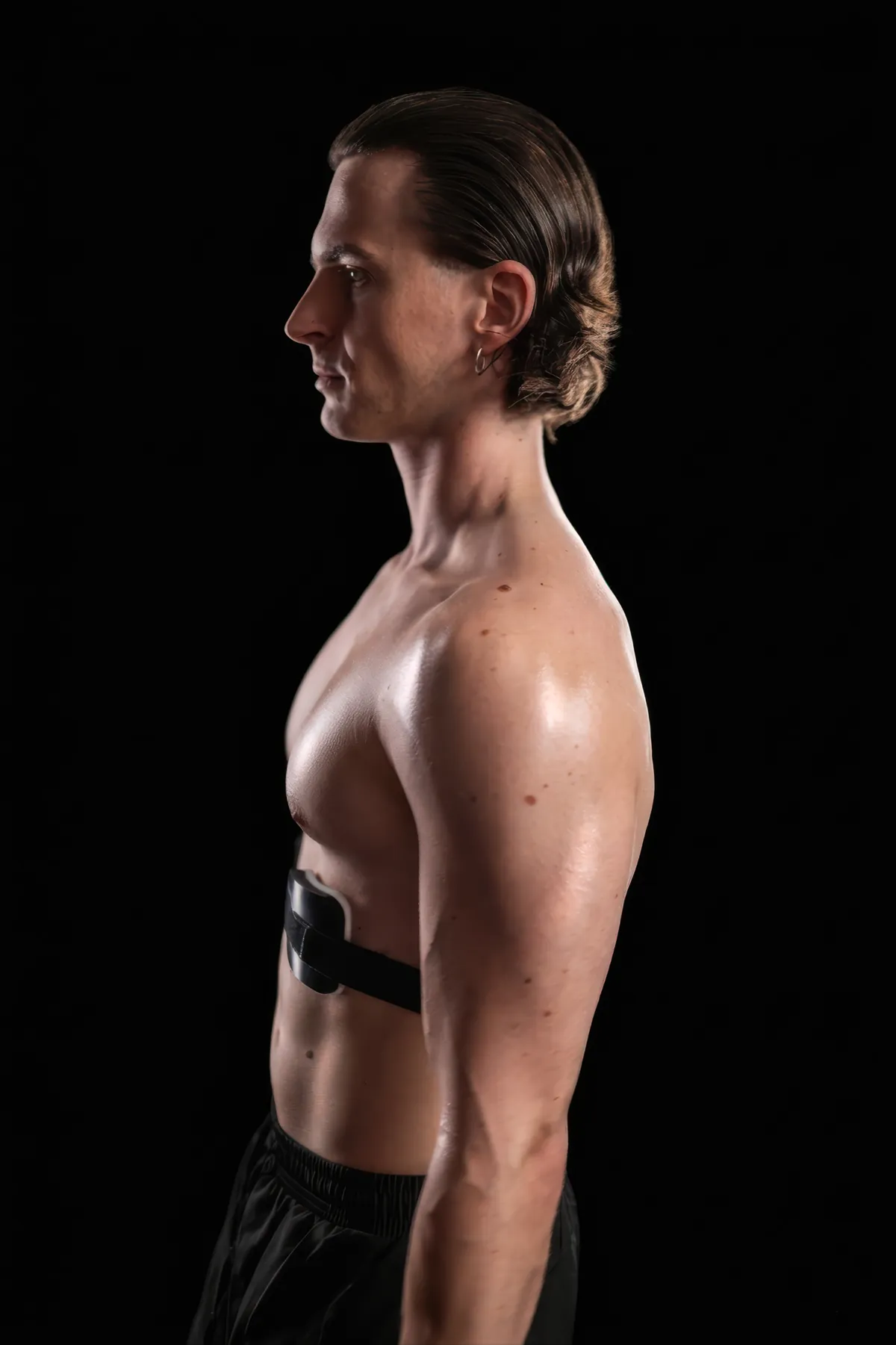
I'm not writing this as a doctor looking at a scan. I had the sunken chest, the flared ribs, the shirt that stayed on at the pool, and nobody could tell me what actually works.
Everything on this page exists because I needed it to exist ten years ago.
I had it. I fixed it.
Now I help you do the same.
I'm Mihail Veleski. Pale, skinny, sunken chest, flared ribs, I had it all, and it wrecked my confidence. Years of consistent, non-surgical training made my deformity unnoticeable.
I founded Mr. Pectus to give people the exact path I had to find the hard way, tested on my own body first, then refined every time someone hit a wall I had not planned for.
Featured in Healthline · Level 5 DUKE Institute Certified Personal Trainer (ISSA) · Specialised in pectus excavatum, carinatum and rib flare.

Medically reviewed
Every clinical claim on mrpectus is reviewed by Prof. Dr. Mustafa Yüksel, MD
Thoracic surgeon, founder of the Chest Wall International Group
What each path
actually costs.
Not in dollars. In time. Side by side, honestly.
Let's be honest about
who this is for.
No surprises between
you and starting.
No waiting on a reply, no onboarding call, nothing to install.
The whole system.
One visit's price.
One payment, lifetime access, free updates forever. Less than a single physio appointment, for the only program built specifically for rib flare.
Try the whole thing for 30 days. Use it, and if it isn't what was described, message me for a full refund, no questions asked. The risk stays with me, not you.
Common questions.
Do I need a rib flare brace? +
Not necessarily. The breathing, core and mobility work in modules 01–04 and 06 produce results without a brace. Compression accelerates correction in most cases and is covered in Module 05, but the course is fully usable without one.
Does this apply to one-sided flare or both? +
Both. The assessment module helps you identify your pattern, asymmetric flare often has a different driver than bilateral flare, and the protocol adapts accordingly.
Can I do this alongside regular training? +
Yes, and the later modules cover exactly how to integrate rib correction into a training program. Some exercise patterns compound correction; others undo it. Module 07 maps this explicitly.
Is this suitable for teenagers? +
Yes, the protocol adapts to skeletal maturity. Adolescents often improve faster because the ribcage is still developing. The assessment module flags age-specific considerations.
How fast will I see results? +
Many people feel breathing and core changes within the first couple of weeks; visible and measurable rib-angle change typically follows over the first 8–16 weeks of consistent work.
How much time does it take each day? +
The daily reset is 15–20 minutes of breathing and positional work, plus 3–4 training sessions a week once the corrective loading phase starts. It’s designed to run alongside a normal life, not replace it.
Will this work for me as an adult? +
Yes, and rib flare is actually the most age-tolerant of the three conditions, because most flare is functional: position and muscle balance, not fused bone. Adults routinely improve it; the assessment module sets honest expectations for your case.
Can breathing exercises really move my ribs? +
It sounds too simple, but it's mechanics: a full exhale lets the diaphragm pull the lower ribs down and in (the zone of apposition), and you repeat that pattern roughly 20,000 times a day. Re-pattern the breath and the ribs get a consistent input toward closed, that's why it's Module 01, not a warm-up.
My flare came with pectus excavatum, which do I fix first? +
Common combination. If the dip is your dominant concern, start with the PE course, its breathing work improves flare too. If the flare bothers you more, start here. The free quiz gives you a straight recommendation for your case.
Is my flare structural, the kind exercises can’t fix? +
A minority of flares involve genuinely prominent costal cartilage that repositioning won’t fully close. The self-assessment in Module 01 helps you tell functional from structural honestly, and even structural cases usually improve, because position always contributes something.
How do I get access after checkout? +
Instantly. Checkout takes a minute and the link to everything lands in your inbox right after, read it on your phone, tablet or laptop. Lifetime access, free updates, nothing to ship.
What if it’s not for me? +
You're covered by a 30-day, no-questions-asked, 100% money-back guarantee. Go through it, and if it isn't what was described, email me for a full refund.
Three honest ways forward.
Take the free 1-minute assessment and get a straight answer for your condition and severity.
Take the assessment →The chat bubble in the corner reaches me directly, ask anything about your case before you decide.
Try the whole thing. If it isn't right for your chest, every dollar comes back.
Start risk-free →Close the ribs.
Not your anatomy.
Get the only system built specifically for rib flare, breathing, core, mobility, compression and loaded strength, in the order that closes the ribs and keeps them closed. For less than one physio session.
Start the system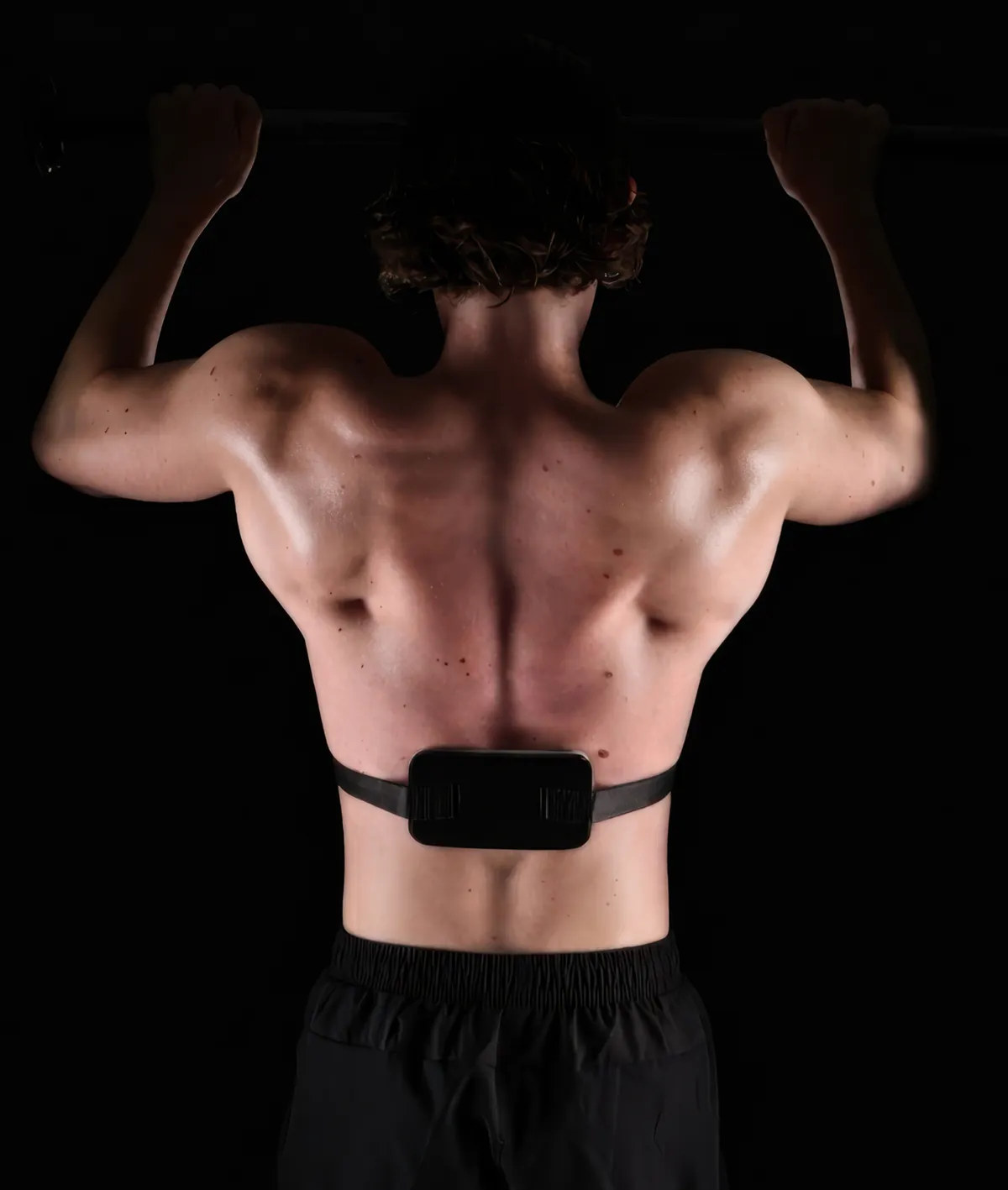
P.S. If you've read this far, part of you has already decided. The only thing you can lose by trying is the version of next year where nothing changed. - Mihail