Read the full plan free
Enter your name and email to unlock the complete Pectus Carinatum plan right here on this page — and get a copy sent to your inbox. No spam, ever.
- Why a flexible carinatum responds best to non-surgical correction
- What the randomized trial on bracing + exercise actually found
- The one factor that decides how flat your chest gets
- The 3-phase compression and exercise protocol
- Honest expectations and a realistic timeline
Contents
Start Here — How to Use This Plan · Is It Right For You?
Part 1 · Understand — 1. What Pectus Carinatum Is · 2. Why It Can Be Corrected
Part 2 · The Science — 3. What the Evidence Shows · 4. The Factor That Decides It
Part 3 · The Plan — 5. Phase 1 · Foundation · 6. Phase 2 · Reduce · 7. Phase 3 · Maintain & Retain
Part 4 · Start — 8. Start Tonight · 9. Honest Expectations
Reference — 10. FAQ · 11. References
How to Use This Plan
Of the three pectus conditions, carinatum is the one with the best non-surgical odds, and the clearest evidence. This free plan lays out the whole foundation: how a compression brace actually re-shapes a protruding chest, what the trials found, and how to start the breathing and posture work tonight, before any device arrives.
The mechanics are on your side. A protrusion is held out by pliable cartilage, and pliable cartilage flattens under steady, measured pressure, far more readily than a hollow can be pulled out. That's why carinatum responds so well to bracing when the chest is still flexible. Your job is to supply the hours and pair them with the daily exercise the trials used alongside the brace.
Read it through once, then use Part 3 as your working protocol. Where the evidence is strong, I cite it; where non-surgical correction has limits, I say so. Knowing whether your chest is flexible enough is the first and most important step.
Two studies anchor it: a 286-patient cohort that screened each chest's flexibility before bracing,1 and a randomized controlled trial on wear time in which every group did daily exercises and the 23-hour group improved most.2
Is It Right For You?
The single screening question is flexibility. In the research, clinicians measured the "pressure of initial correction": how much pressure it takes to flatten the chest, and braced the flexible chests rather than operating.1 A chest that gives under hand pressure is a strong candidate; a rigid one is not.
- The thorax flattens under moderate pressure
- Adolescent or young adult
- Motivated to wear the brace long daily hours
- Willing to log wear time and exercises
- A rigid protrusion that won't flatten
- A very severe or asymmetric case
- Cartilage hardened with age
- Pain, breathing difficulty, or other findings
If your chest is flexible, this plan is built for you. If it's rigid or severe, get assessed, surgery (Ravitch or a minimally-invasive repair) stays a valid option, and a partial brace result is worth knowing about up front.
What Pectus Carinatum Is
Pectus carinatum ("pigeon chest") is the opposite of excavatum: the sternum and cartilage grow outward, pushing the chest forward. The good news is mechanical, a protrusion is easier to press back in than a hollow is to pull out, which is why carinatum is the pectus deformity most responsive to non-surgical treatment when the chest is still flexible.
It usually becomes noticeable during the adolescent growth spurt, which is also the window when the cartilage is most pliable and most responsive to bracing. Catch it while the chest still flexes, and you have the ideal conditions for correction.
Why It Can Be Corrected Without Surgery
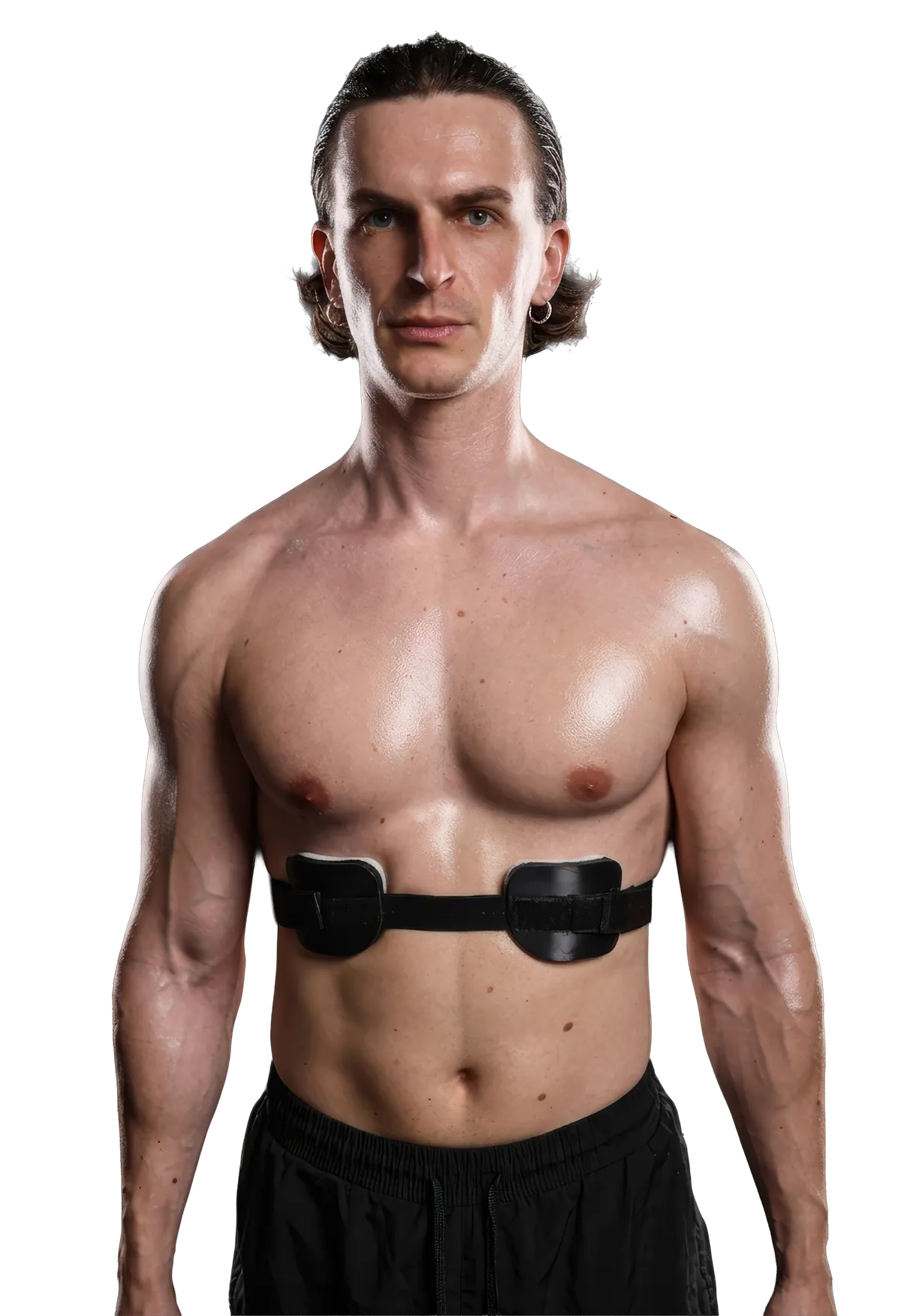
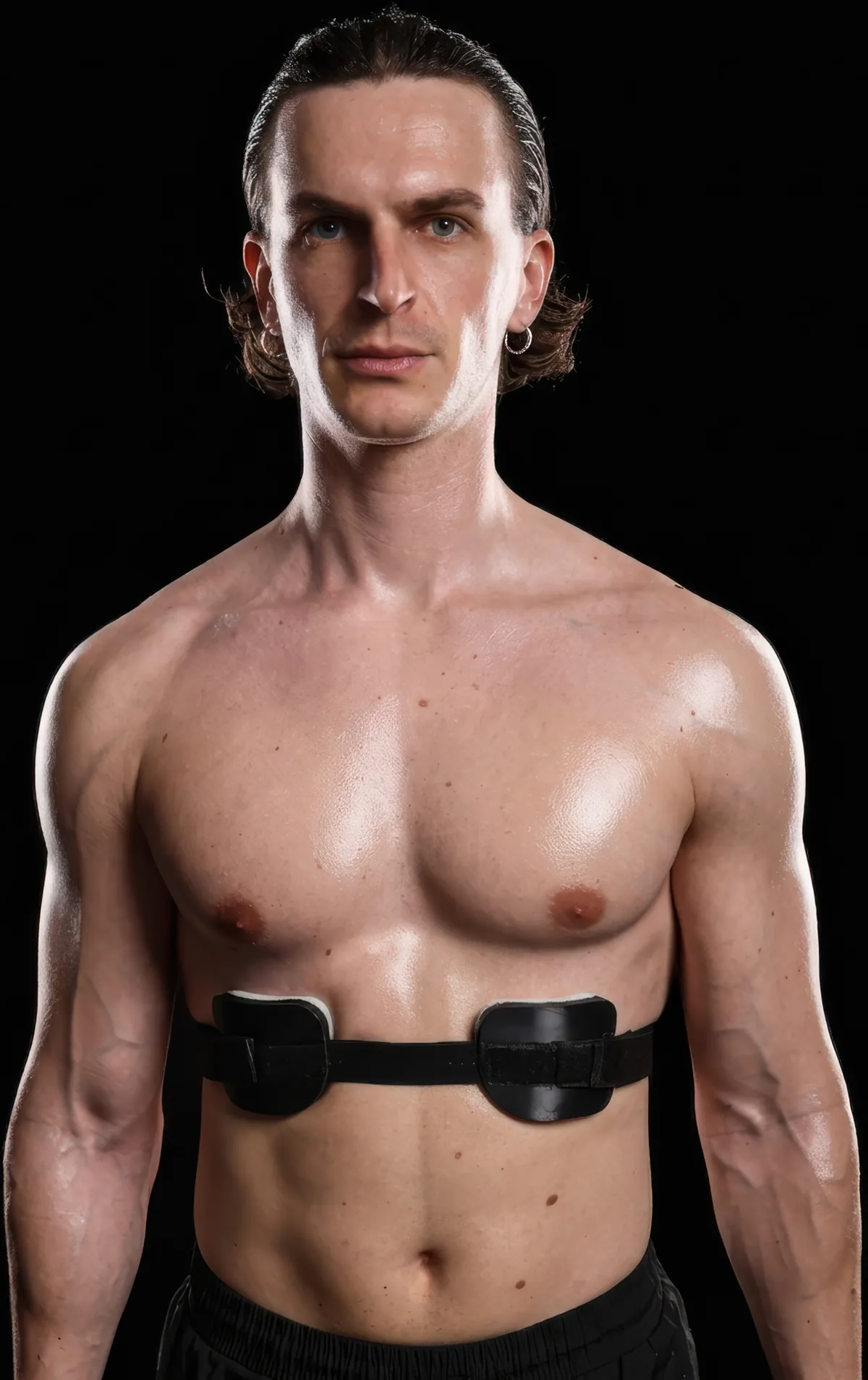
The cartilage that pushes the chest out is pliable in most adolescents and young adults. Apply steady, measured pressure to it for enough hours per day, over enough months, and it gradually remodels flatter, and then holds. This is done with a dynamic compression brace: a front-to-back brace tuned to your chest's flexibility, not just cranked tight.
The word that matters is dynamic. The brace is set to a measured, skin-safe pressure rather than a maximal one, and adjusted as the chest responds. Cranking it tight doesn't speed things up, it just damages skin and gets the brace abandoned. Measured pressure, worn for many hours, is what remodels the cartilage.
What the Evidence Shows
Carinatum bracing has some of the strongest evidence in non-surgical pectus care, including a randomized trial, a rarity in this field.
In a study of 286 brace patients, researchers first measured each chest's flexibility (the "pressure of initial correction") and braced the flexible chests rather than operating. They concluded brace therapy is "a valuable treatment option to correct pectus carinatum in patients with a flexible thorax."1
A randomized controlled trial then tested wear time. Groups at 23 hours/day, 8 hours/day, and a control group all did daily exercises; every group improved, and the 23-hour group improved the most with no extra side effects.2 The lesson: brace and exercise work together, and hours-on-chest drives the result.
The wider literature agrees. Earlier work on compressive orthotics first showed a flexible carinatum reshapes under measured pressure,3 later studies trimmed wear time toward more livable schedules,4 and a 2025 cohort of dynamic-compression-brace patients again found early start and daily hours decided the result.5 Across reviews of non-surgical chest-wall care, the pattern is consistent: brace the flexible chest, and reserve surgery for the rigid one.6
It helps to know what you're working with. Carinatum is an overgrowth of costal cartilage pushing the sternum forward,7 long described in the surgical literature as under-treated and over-operated,8,9 and worth screening alongside posture and spine, since pectus and scoliosis often travel together.10
The Factor That Decides Success
Across every bracing study, the deciding variable isn't the device, it's compliance. The chests that flatten belong to the people who wear the brace the prescribed hours and keep up the daily exercises. Treatment that's abandoned out of boredom or discomfort fails; treatment that's worn consistently works. Build the habit and protect it.
A brace in a drawer corrects nothing. The most common reason carinatum bracing "doesn't work" isn't a bad chest or a bad device, it's hours that never got worn. Make the brace comfortable enough to live in, plug it into your daily routine, and the cartilage does the rest.
Phase 1 · Foundation
Before the brace, you build the breathing and posture base that the trials paired with bracing.
- Posture reset: carinatum is often paired with a swayed, ribs-up posture. Train a tall, ribs-down position so you stop driving the chest forward.
- Exhale-led breathing: long, complete exhales that bring the lower ribs down and in, the opposite of the puffed-chest default.
- Baseline measurement + photos: protrusion height at the most prominent point, plus a side photo.
Phase 2 · Reduce
The brace is set to a comfortable, skin-safe pressure, measured, not maximal. The goal is maximum daily wear, because the trials show wear-time is what moves the protrusion.
- Build toward the high daily hours the RCT linked to the best correction2 (working up as skin tolerates).
- Skin should pink and recover within an hour, red marks that fade are normal, broken skin is not.
- Continue the daily exercise routine throughout, it's part of the protocol, not an add-on.
The brace should compress, not crush. Marks that fade within an hour are fine; persistent purple skin, blisters, broken skin, or pain mean back off the pressure or the hours. If you can't get comfortable enough to wear it for long stretches, the pressure is set too high, measured beats maximal every time.
Phase 3 · Maintain & Retain
Once the chest is flattened, wear drops to a maintenance schedule (often nights only) to hold the correction while the cartilage stabilizes in its new shape. Posture and breathing work continue so the flat chest becomes your default.
- Taper, don't quit: reduce daily hours gradually; stopping abruptly while cartilage is still settling risks rebound.
- Keep the exercises: the daily routine maintains the ribs-down posture that holds the result.
- Re-check periodically: photos every few weeks confirm the correction is holding before you reduce wear further.
Start Tonight (No Equipment Needed)
The foundation that makes the brace work costs nothing and starts now. Build the habit before the device arrives.
- Take a baseline side-profile photo and measure the most prominent point of the protrusion.
- Practice 5 minutes of exhale-led breathing, long exhale, ribs down, belly drawing in.
- Drill a ribs-down standing posture against a wall.
- Set the daily routine now, so the brace plugs into an existing habit when it arrives.
This free plan is the foundation. The full Pectus Carinatum Course turns it into a measured, day-by-day bracing-and-exercise protocol, and the deep-dive Carinatum Brace Guide covers POC/POT pressures and wear schedules in detail. Want it tailored to your chest's flexibility? Work with me 1-on-1.
Honest Expectations
- The thorax is still flexible
- You're motivated and compliant
- You log the daily wear hours
- The protrusion is rigid
- The case is very severe
- Cartilage has hardened with age
A rigid or very severe protrusion, or an older patient whose cartilage has hardened, may correct only partially, and surgery (Ravitch or minimally-invasive repair) remains an option. Assess your flexibility first; if you're a candidate, the result comes down to the hours you put in.
FAQ
How tight should the brace be?+
How many hours a day do I need to wear it?+
Do I really need the exercises too?+
How do I know if my chest is flexible enough?+
Will the correction hold after I stop bracing?+
References
- de Beer et al. (2017). The Dynamic Compression Brace for Pectus Carinatum: Intermediate Results in 286 Patients. Ann Thorac Surg. PMID 28274516
- Giray et al. (2021). A Comparative Study on Short-Term Effects of Compression Orthosis and Exercises in Pectus Carinatum: A Randomized Controlled Pilot Trial. Eur J Pediatr Surg. PMID 32146715
- Egan et al. (2000). Compressive orthotics in the treatment of asymmetric pectus carinatum: a preliminary report with an objective radiographic marker. J Pediatr Surg. PMID 10945691
- Wahba et al. (2017). A less intensive bracing protocol for pectus carinatum. J Pediatr Surg. PMID 28196662
- Kahraman & Yüksel (2025). Clinical outcomes of dynamic compression bracing in pediatric patients with pectus carinatum: a retrospective study. Research Square (preprint). DOI 10.21203/rs.3.rs-7802455
- Haecker (2018). Nonsurgical treatment of chest wall deformities: contradiction or complement? Eur J Pediatr Surg. PMID 30103239
- Park et al. (2014). The etiology of pectus carinatum involves overgrowth of costal cartilage and undergrowth of ribs. J Pediatr Surg. PMID 25092085
- Fonkalsrud (2003). Pectus carinatum: the undertreated chest malformation. Asian J Surg. PMID 14530101
- Fonkalsrud & Beanes (2001). Surgical management of pectus carinatum: 30 years' experience. World J Surg. PMID 11572031
- Haje et al. (2024). Evaluation of idiopathic scoliosis in subtypes of pectus excavatum and carinatum. Acta Ortop Bras. PMID 39802579
- Abdellaoui et al. (2023). Pectus arcuatum: a pectus unlike any other. J Pediatr Surg. PMID 37045714
- Brochhausen et al. (2012). Pectus excavatum: history, hypotheses and treatment options. Interact Cardiovasc Thorac Surg. PMID 22394989
- Lester (1953). Pigeon breast (pectus carinatum) and other protrusion deformities of the chest of developmental origin. Ann Surg. PMID 13031485
- Lester (1958). The relation of pectus excavatum to pectus carinatum; classification of anterior chest wall deformities. J Pediatr. PMID 13492135
- Ishida & Fukushima (2001). Pectus carinatum and excavatum. Ryoikibetsu Shokogun Shirizu. PMID 11528853
Carinatum has stronger non-surgical evidence than the other two conditions, including a randomized trial, but it still depends on a flexible chest and consistent wear. This plan is education only, not a substitute for personalized medical care.
People who flattened it without surgery
Coached one on one since 2015, with the timelines and the numbers they actually logged.
“Mihail doesnt sugarcoat anything. told me exactly what to expect and exactly how long it would take. 12 months in and my carinatum is flat. i finally take my shirt off at the beach”
“The carinatum brace is really well made. fits perfect to my chest and i can wear it under a t-shirt at work. results started showing around 4 months”