Contents · 7 sections
In this blog post, we’re exploring how to understand and manage discomfort associated with the Nuss bar.
If you’re reading this, it’s likely because you’ve undergone the Nuss procedure for pectus excavatum.
Don’t worry, you’re not alone in this experience. Parents, too, often seek guidance on supporting their children through the post-operative period.
Let’s get started!
Why Patients Feel Discomfort
So, you’ve gone through the Nuss procedure, and now you’re dealing with some discomfort.
But why?
The primary reasons for this discomfort can be broken down into a few key factors:
Instant Sternum Elevation
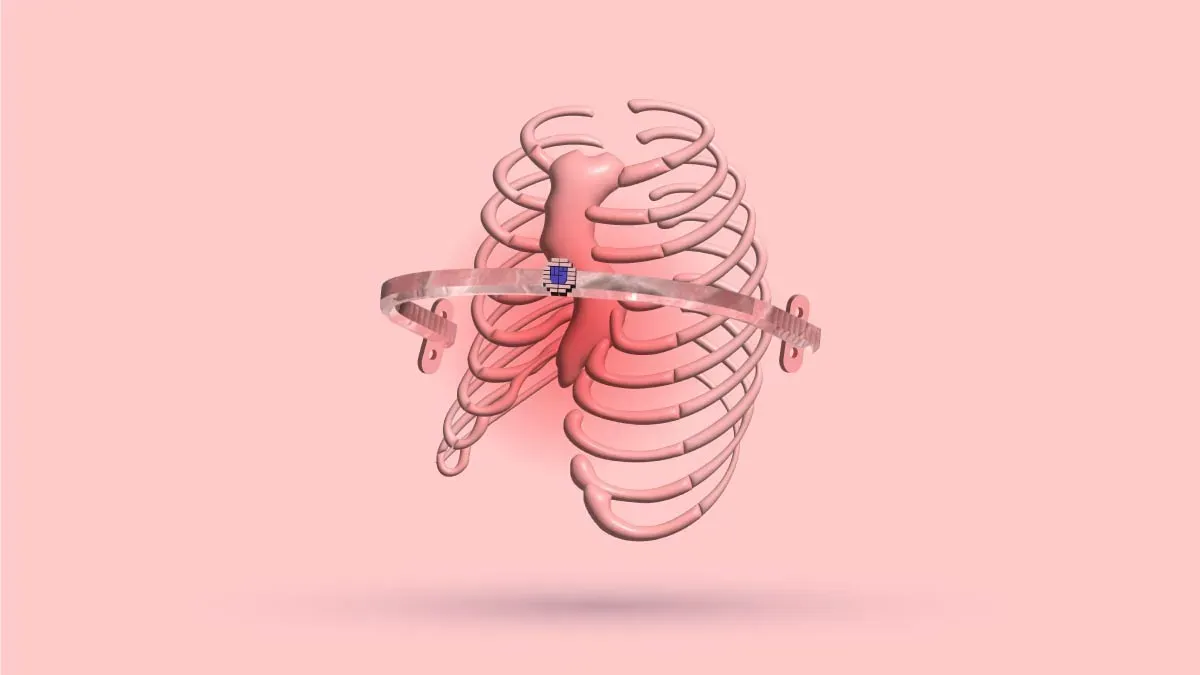
The Nuss procedure involves placing a metal bar under the sternum to correct the sunken chest.
This elevates the sunken sternum to a normal position. It causes significant discomfort because your body adjusts.
Pressure on Surrounding Tissues
The bar puts pressure on surrounding tissues, which can contribute to pain.
Healing Process
Like any surgical procedure, healing takes time. The body’s natural response to trauma can lead to swelling, inflammation, and, yes, discomfort.
Bar Movement
One of the risks associated with the Nuss procedure is bar displacement. This can happen due to physical activity, sudden movements, or just the body’s reaction as it heals.
Keeping an eye on this is crucial because it can lead to increased pain and other complications.
Breathing Difficulty
Another common issue is breathing difficulty. The stiffness and tightness in the chest area post-surgery can make it hard to take deep breaths.
This is something to pay attention to closely, as proper lung function is essential for recovery.
Skin Irritation
Finally, skin irritation around the incision sites can be an annoying problem.
The incisions need to heal properly, and any irritation or infection can slow down the recovery process and cause discomfort.
Common Symptoms
Knowing what to look for can help you differentiate between normal post-op pain and something that needs medical attention.
Here are some common symptoms to watch for:
Limited Mobility
Some stiffness is normal, but if it’s severely restricting your movement, it might need attention.
Pain Intensity
Post-op pain is expected, but if the pain is intense and persistent, it could indicate an issue. Think of it like this: a dull ache is normal, but sharp, severe pain is not.
Breathing Changes
Shortness of breath, wheezing, or chest tightness could signal complications. Don’t ignore these signs.
Heart Palpitations
If you’re experiencing irregular heartbeats, it’s essential to get this checked out. Your heart’s rhythm should remain steady.
Skin Sensations
Itching, burning, or numbness around the bar can indicate irritation or infection. Keep the area clean and monitor any changes.
Coping Strategies & Solutions
Pain Medication
Proper use and timing of pain medication can make a world of difference. Always follow your doctor’s advice and never self-medicate. The right pain relief can help you manage discomfort effectively.
Positioning
Finding a comfortable sleeping and sitting position is crucial. Elevating your upper body slightly while sleeping can reduce pressure on your chest.
When sitting, use pillows to support your back and avoid straining your chest.
Breathing Exercises
Breathing exercises can greatly improve lung function and reduce stiffness. Simple techniques like deep breathing can help keep your lungs healthy.
Skin Care
To prevent irritation and infection, keep the incision sites clean and dry. Avoid applying any harsh products to the area.
Real-Life Examples
Many patients who have undergone the Nuss procedure experience discomfort from the bar.
However, each individual approaches coping with it differently and recovery can vary from person to person.
THC Edibles and Discomfort
I remember I read an idea about taking THC marijuana edibles post-Nuss procedure and experiencing discomfort. If you’re comfortable, and old enough, you can ask your surgeon about this.
Personal Experience Post-Nuss Bar Procedure
Another user shared their experience three weeks post-procedure, reporting minimal pain overall, except for discomfort during coughing and sneezing.
Non-Surgical Alternatives
For those looking for non-surgical approaches, there are options like cryoanalgesia (cold therapy) for pain control, physical therapy, and muscle strengthening.
Psychological support for body image concerns can also be incredibly beneficial.
Conclusion
Nuss bar discomfort is a common post-op issue, but understanding the reasons behind it and knowing how to manage it can significantly improve your recovery journey.
Informed self-care is key. Monitor your symptoms, follow your pain management plan, and don’t be shy to seek professional guidance.
Connecting with supportive communities can also provide valuable insights and emotional support.
Stay strong, stay informed, and take care of yourself!
Sources
- “Complications and Outcomes of the Nuss Procedure in Adult Patients: A Systematic Review - PMC.” Accessed August 28, 2024. https://www.ncbi.nlm.nih.gov/pmc/articles/PMC10031548/ Read it
- FrozenSprinkler. “Post Nuss Bar Procedure. Your Opinion.” Reddit Post. R/PectusExcavatum, November 16, 2020. www.reddit.com/r/PectusExcavatum/comments/jvhzx8/post_nuss_bar_procedure_your_opinion/ Read it
- “Nuss Procedure | UCSF Department of Surgery.” Accessed August 28, 2024. https://pedsurg.ucsf.edu/procedure/nuss-procedure Read it
Reading about the condition is one thing. Knowing which one you have, how severe it is and what to do first takes about a minute.
- Your condition named, not guessed
- A severity read you can act on
- The exact next step for your case

This article is for educational purposes only and does not constitute medical advice. Always consult a qualified healthcare professional before starting any treatment protocol. View full disclaimer →