Contents · 6 sections
Weightlifting can support vacuum bell therapy by strengthening the weak back muscles responsible for proper posture.
It is essential to focus on proper technique to reap the maximal postural benefit of the exercises while limiting the risk of injury. Mr. Eckart Klobe himself recommends exercising to support the vacuum bell therapy.
In this article, I will write about everything you need to know about vacuum bells and bodybuilding.
Vacuum Bell Therapy Impacts Muscles
According to Eckart Klobe, lifting the chest wall stretches the muscles that are pulling from the inside, such as the diaphragm and the transversus thoracis muscle.
Because of this, these muscles will get used to their new position and won’t pull the sunken chest inward quite as far as when you remove the vacuum bell device.
Generally, this muscle adaptation takes the most time in the whole treatment procedure.
Mr. Klobe’s Accessory Bodybuilding Exercises
Accessory physical exercises are critical to straighten, stretch and tighten the upper body to support the vacuum Bell therapy.
According to Mr. Klobe, you cannot expect that only the vacuum bell application alone will improve posture. Typically, the vacuum bell can overcome the skeletal resistance of the sunken chest.
Strengthening the Back Is Key
Still, proper posture is only possible thanks to the strength of the patient’s muscles. That is why strengthening the back muscles with weightlifting will positively impact the success of vacuum bell therapy.
Two Bodybuilding Exercises
Eckart Klobe recommends the following two bodybuilding exercises to support a vacuum bell treatment:
Dumbbell Swings
This is a simple exercise you can perform. All you need is a set of light dumbbells. To start, grab one in each hand. Mr. Klobe recommends a 3-5% of your body weight dumbbell. When you get used to exercising, you can increase your weight.
Swing the dumbbells in a motion like a tennis payer swinging his racquet or a boxer swinging his fists as if he is throwing something.
Mr. Klobe recommends performing this exercise every day for about five minutes. As he says, this exercise aims to strengthen the upper back musculature.
Dumbbell Pullovers

Start by grabbing a light dumbbell (3-5% of your body weight in each hand) and lay on a bench on your back. Press the dumbbells and the resulting hollow back flat on the bench using your motor activity.
You should do the exercise for one minute every single day. According to Mr. Klobe, the pullover raises the sternum through the pectoral musculature and flattens the flaring ribs through the abs.
I recommend you add these exercises to your bodybuilding routine. That way, you will reap the benefits of both exercises meant to increase the mass of your muscles and corrective exercises to accompany vacuum bell therapy.
”Bodybuilder” Vacuum Bell for Bodybuilders
A particular vacuum bell size is built with thicker silicone made for bodybuilders and unique applications.
This model has slightly slimmer and softer sides than the classic model. Thus, the bodybuilder vacuum bell (19 cm) will be gentler on large chest muscles and sensitive nipples.
When there is horizontal indentation along the diaphragm line, it may initially bend the rib cage along this line and thus open an anatomically good way to lift the breastbone further.
My Bodybuilding and Vacuum Bell Therapy Experience
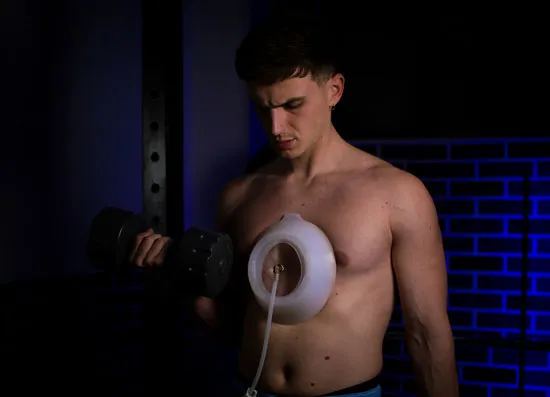
While doing the vacuum bell therapy, I also did a lot of weightlifting and yoga 3-to five times a week. The vacuum bell didn’t affect my training. Surprisingly, it was an extremely positive experience!
I focused mainly on the musculature of my chest, core, and back. You should never neglect back training. Those muscles are responsible for keeping your posture upright and sturdy.
The combination of physical therapy and suction bell treatment made the dent in my chest unnoticeable.
Performing bench presses, dips, chest flies, dumbbell pullovers, pull-ups, and rows will significantly impact your deformity. Weightlifting will strengthen you mentally and physically and help you build discipline for applying vacuum bell.
Combining weightlifting and vacuum bell therapy made the dip in my chest much less noticeable.
My chest muscles became toned and muscular, increasing my confidence in showing my chest to others.
Bodybuilding Taught Me Discipline
I didn’t struggle with the discipline of applying the vacuum bell daily. I genuinely believe that weightlifting was a direct factor in this.
I always thought performing these heavy exercises was ten times harder than having the discipline to put on the suction cup for a few hours a day.
Applying the vacuum device will be a breeze if you go to the gym for a few days a week. Additionally, I highly recommend you do yoga, Pilates, or other posture-improving exercises before starting the vacuum bell treatment.
That will stretch your anterior chest wall. Placing the suction cup directly over the dent will be much easier. Also, you will significantly minimize the chance of the vacuum bell falling off your chest.
Walking upright with a stable posture will ensure that the suction cup stays on your body tightly.
The Bottom Line
Performing bodybuilding exercises can help you strengthen your back muscles and improve posture. This will help with the success of the vacuum bell therapy.
According to Mr. Eckart Klobe, performing light dumbbell swings and pullovers can help with the treatment. Bodybuilding builds discipline.
That alone will help you with the consistency of the vacuum bell application. Adding muscle strength and mass will only be a side benefit of bodybuilding.
Thank you for reading!
Sources
- OT V. Trichterbrustversorgung mit der Saugglocke nach Eckart Klobe [Internet]. Orthopädie Technik. 2019 [cited 2022 Dec 1] https://360-ot.de/trichterbrustversorgung-mit-der-saugglocke-nach-eckart-klobe/
- Transversus thoracis muscle [Internet]. Kenhub. [cited 2022 Dec 1]. Read it
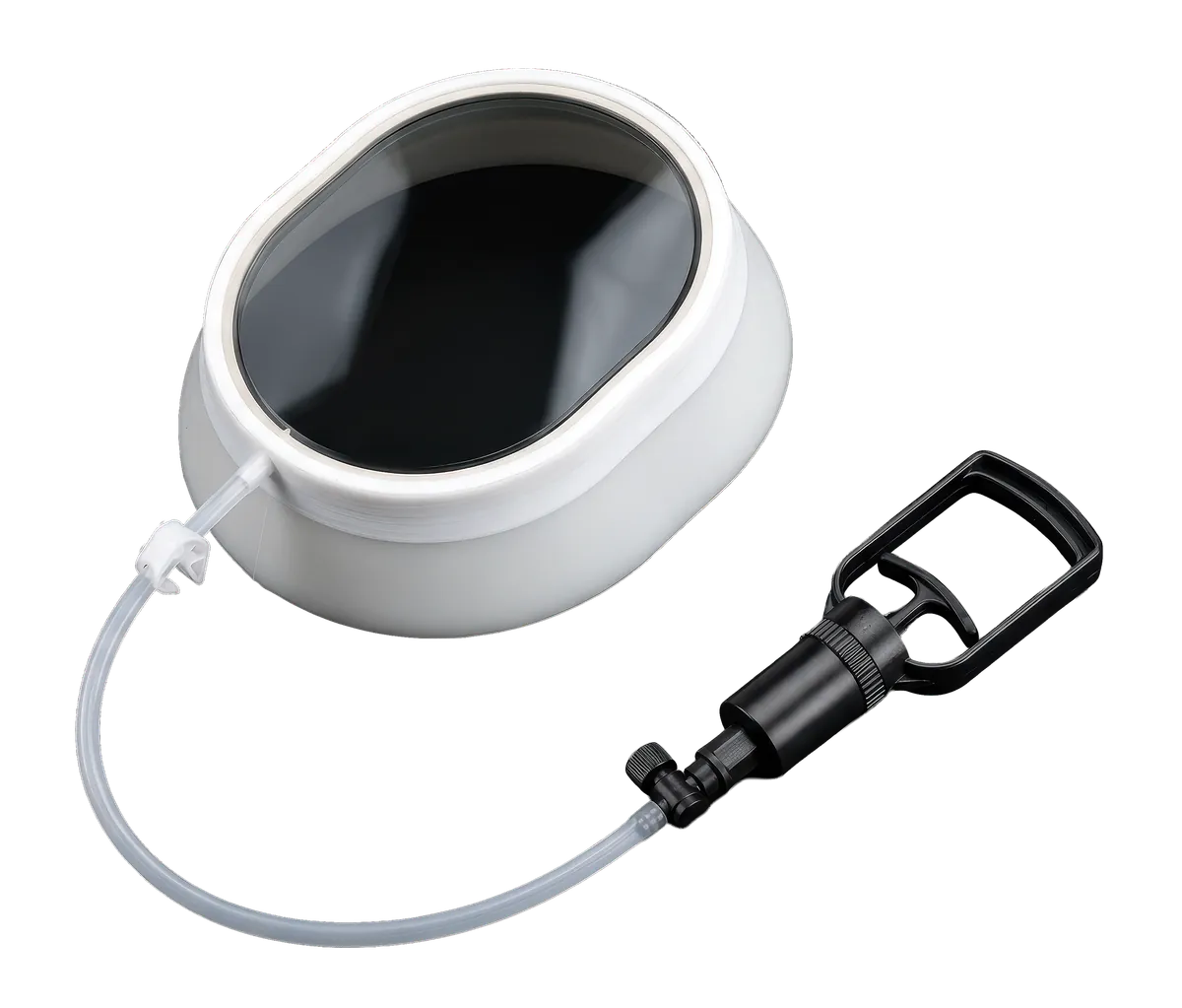
A bell sized to your chest and depth, with the session length and suction progression that decide whether it works.
- Cup sized to your chest, not a size chart
- Session length and pressure progression
- How to tell at 8 weeks if you are responding

This article is for educational purposes only and does not constitute medical advice. Always consult a qualified healthcare professional before starting any treatment protocol. View full disclaimer →