Contents · 4 sections
Generally, vacuum bell therapy for pectus excavatum is considered very safe. Over the years, just a few problems have been reported.
Comparatively, the extensive use of Nuss procedures for correcting sunken chests raised the frequency of surgical complications.
Plenty of studies reported increasing rates of near-fatal complications. Surgeries can cause injuries to the heart and mammary vessels.
Because of this evidence, the vacuum bell therapy for fixing pectus excavatum has made this alternative therapy a focus of interest for us with pectus excavatum.
13 Most Common Vacuum Bell Side Effects List
Below is a list of every single possible side-effect that has been reported in the history of vacuum bell therapy use:
- Dizziness
- Bruising
- Gynecomastia
- Irritated Nipples
- Sore chest muscles
- Back pain (dorsalgia)
- Crafted skin
- Blisters
- Loose skin
- Small red circular non-raised patches (petechial bleeding)
- Blood droplets
- Acne
- Tingling of the upper extremities (transient paresthesia)
Dizziness
Vacuum bell treatment can result in dizziness. The patient should stay seated or supine at the beginning and end of a treatment session. I experienced that slow pumping and depressurization of the device reduce the risk of dizziness.
Once the vacuum bell is under the negative pressure you desire, you can stand up carefully and continue your day.
Bruising
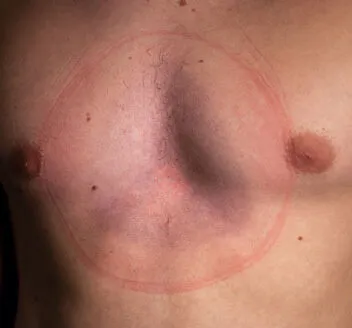
If your skin turns blue after applying the suction bell, this is a hematoma or bruise - subcutaneous hematoma. A high percentage of vacuum bell patients have such hematomas. This is nothing to be afraid of.
These hematomas usually go away very quickly and recover on their own.
In some severe cases, it may be dark red to purple.
However, if dark (black) hematomas occur, please seek medical help. The presumed cause is that blood temporarily pools under the vacuum bell.
To treat this, remove the Vacuum Bell after about 20 minutes, wait a few minutes and then reapply the vacuum bell. Decrease the negative pressure.
Your skin will get used to the suction bell therapy within a week. These side effects are temporary and usually disappear with suitable daily use adaptation.
Gynecomastia
In some adolescents and young men using the vacuum bell, enlargement of the nipples has been noticed, as if female breasts were beginning to develop.
The supposed reason is that the repeated touch stimulation of the vacuum bell causes breast growth.
If this starts to bother you, please consult your doctor. Depending on the severity, the doctor will decide whether you should take a break for several weeks or if drug therapy is required. However, this occurs very rarely.
Irritated Nipples
This is caused because of nipple contact with the vacuum bell. If the edge of the vacuum bell crosses the nipples, it may lead to irritation.
To prevent this, you can try to offset the vacuum bell slightly to one side so that one nipple is fully covered and the other remains completely bare.
Sore Chest Muscles
This can happen because the chest and rib muscles stretch during vacuum bell treatment. You can pause the vacuum bell treatment for a few days to stop this feeling.
Shorter spans of treatment and weaker negative pressure also help.
Irregular Back Pain
This may happen because of bending moments. The attachment of the ribs partly provides the counter forces to the spine.
To prevent this, shorter treatment lengths and weaker negative pressure are suggested.
Chafed Skin
This may happen from the skin chafing on the polycarbonate window, especially when the vacuum bell is worn during strenuous physical activity. You should rest a few days until the skin is healed if it happens. If you don’t, it can lead to bleeding because of the negative pressure.
Shorter lengths of treatment, weaker negative pressure, and less movement while wearing the vacuum bell will help with this.
Itchy Skin Blisters
Skin blisters may also appear. They are usually clear to light yellow and, less commonly, slightly reddish. Like most side effects, it may require a break of several days until the blisters have resolved. If you don’t rest, they may bleed under negative pressure.
Loose Skin
This may occur from fluid collecting in the tissues.
To prevent this, use shorter lengths of therapy and weaker negative pressure.
Blood Droplets
Blood droplets on the skin are caused mainly by the extreme negative pressure of the vacuum bell. This occurs very rarely. To prevent this, shorten the length of treatment and weaken the negative pressure.
Petechiae
This is also known as pinpoint bleeding in the skin. This may result from negative pressure. It is usually 2 to 4 millimeters in diameter, depending on the severity.
In a lot of cases, this is unavoidable. Usually takes a few weeks to fade after finishing the treatment.
Acne
Acne can develop in the suction zone of the vacuum bell. This is extremely rare. However, proper skin care on the chest is critical.
Tingling arms
Tingling arms is a predecessor to numbness. This is most common in the extensor muscles of the upper arms and less common in the forearms.
To stop this, you should shorten the treatment duration and weaken the negative pressure.
Can Vacuum Bell Cause, Collapsed Lung?
Vacuum bell therapy can’t cause a collapsed lung (tension pneumothorax). Some people believe in this because tracheal suctioning is directly related to pneumothorax.
However, tracheal suctioning can’t be done with a vacuum bell. It is done by a suction device (completely different than a vacuum bell) to aspirate secretions from the airways during surgical procedures.
Scientific evidence shows that Rehbein’s method causes a collapsed lung during an operation. This method is one of the few surgical procedures to repair pediatric pectus excavatum.
Pectus excavatum patients need to be cautious of the possible occurrence of pneumothorax, especially during minimally invasive procedures.
The Bottom Line
Although rare, vacuum bell problems may still be annoying for some people. This problem occurs primarily because of excessive vacuum bell use and intense negative pressure in the first weeks and months of treatment.
The vacuum bell intensity of application should be gradual. To prevent skin problem side effects, it is essential to cultivate a skincare habit.
If you have concerns or need to deal with a problem caused by the vacuum bell, don’t hesitate to contact me personally or write a comment in the section below.
Thank you for reading!
Sources
- Patel AJ, Hunt I. Is vacuum bell therapy effective in the correction of pectus excavatum? Interact Cardiovasc Thorac Surg. 2019 Aug 1;29(2):287-90.
- Complications associated with the Nuss procedure: analysis of risk factors and suggested measures for prevention of complications - PubMed [Internet]. [cited 2022 Dec 1]. Read it
- Hematoma: Overview, types, treatment, and pictures [Internet]. [cited 2022 Dec 1]. Read it
- Pneumothorax: Practice Essentials, Background, Anatomy [Internet]. [cited 2022 Dec 1]. Read it
- Tracheostomy Suctioning Information & More [Internet]. [cited 2022 Dec 1]. Read it
- Hitomi K, Maeda L, Taniguchi A, Kawahara R, Kitamura S. [Two cases of tension pneumothorax caused by tracheal suction during the operation of pectus excavatum]. Masui. 1993 Oct;42(10):1517-20.
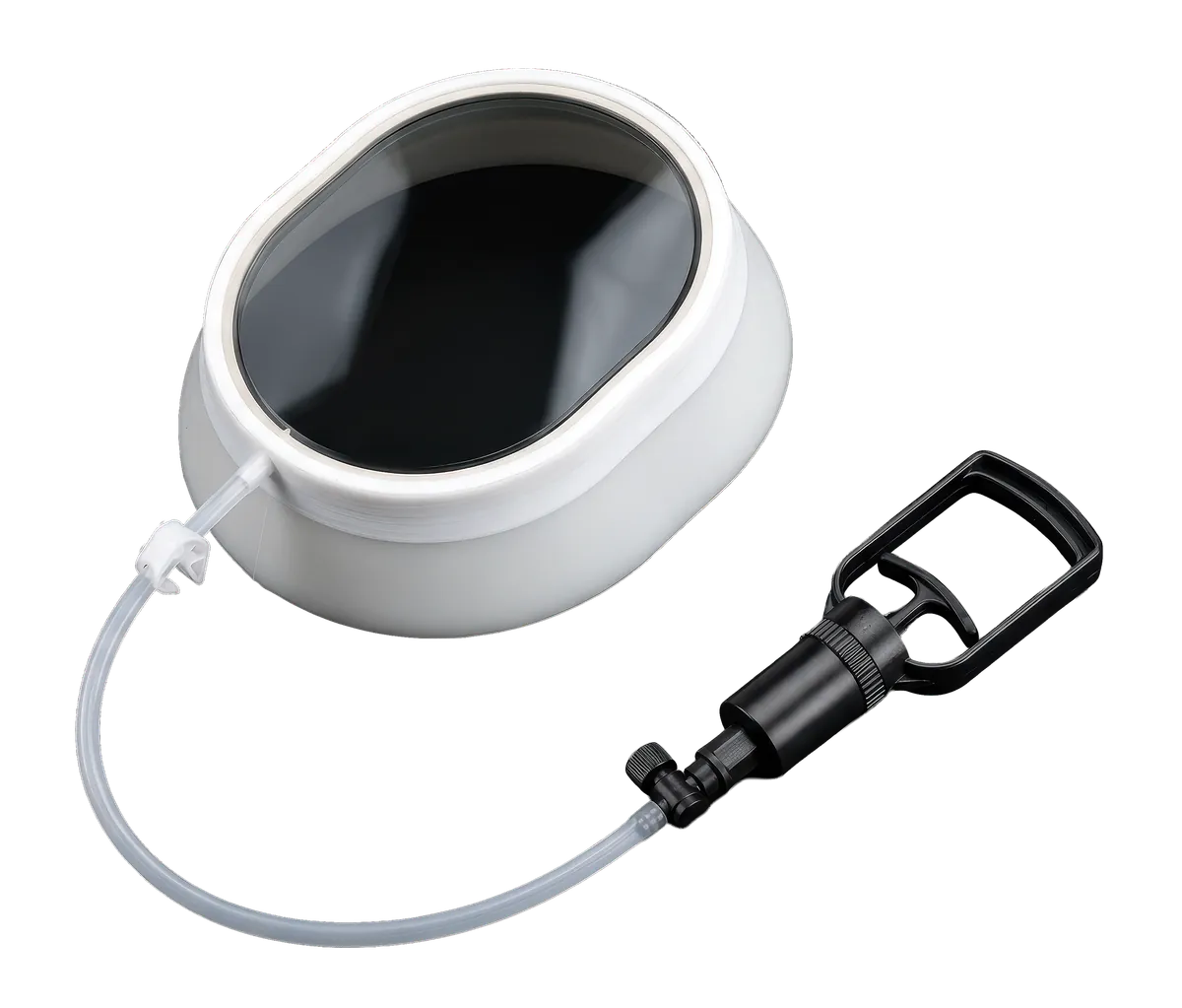
A bell sized to your chest and depth, with the session length and suction progression that decide whether it works.
- Cup sized to your chest, not a size chart
- Session length and pressure progression
- How to tell at 8 weeks if you are responding

This article is for educational purposes only and does not constitute medical advice. Always consult a qualified healthcare professional before starting any treatment protocol. View full disclaimer →